Sapphic Scify Comics Publications
Personal Publications of the Sapphic Variety
Sapphic Scify Comics was born out of a COVID-era curiosity in 2020. I was in my second semester of graduate school, locked in my apartment, and desperately seeking community or inspiration. This led to an all-consuming desire to watch as many lesbian-themed action movies as possible. I soon learned there were only about 4, so I quickly ran out of content. Seeking more creature comforts, I turned to another love of mine: science fiction. I dug into the origins of Star Trek and explored retro science fiction designs and illustrations. This is how I stumbled onto the science fiction pulp magazine era of the 20s-50s. I was quickly falling in love with every three-eyed alien and pear-shaped machine, but something kept bothering me. All the women looked afraid. Not just afraid; they were all in the act of being traumatized. Women with perfect hair falling over rocks with chests bursting out of bras, women passed out, half-nude, being carried by a man or a monster, women trapped in containment tubes; the list is truly endless. Moreover, all these women were white, normally blonde, thin, and half-nude. But something kept drawing me back to these magazines. At the same time, I was going through the archive of every lesbian movie I could get my hands on: The Watermelon Woman, Desert Hearts, Bound, Portrait of a Lady on Fire, But I’m a Cheerleader, etc. None of these movies (outside of Bound and the 2001 Charlie’s Angels reboot) really scratched that itch for women loving women while dodging laser beams that I was so deeply craving. So, switching directions, I tried to track down as many lesbian-based novels as I could find. This, of course, led me to the crossroads of The Price of Salt (better known as Carol, the lesbian Christmas movie), the lesbian pulp movement of the 50s and 60s, and the Lavender Scare.
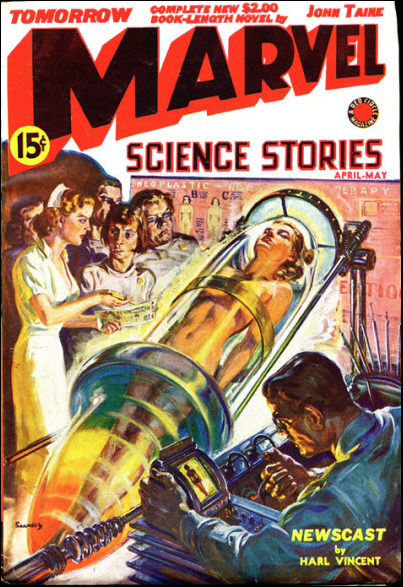
The more I read and dug, the more questions I had:
How come I had never heard of these novels? Why isn’t there a statue of Beebo Brinker, the titular butch character of the Beebo Brinker Chronicles? Why are all these books out of print? WHY DO ALL OF THESE BOOKS END IN SUCH A SAD WAY? Where are the trans and POC characters? Why do I hate these covers more than the science fiction covers?
I would soon have some answers to a lot of these questions:
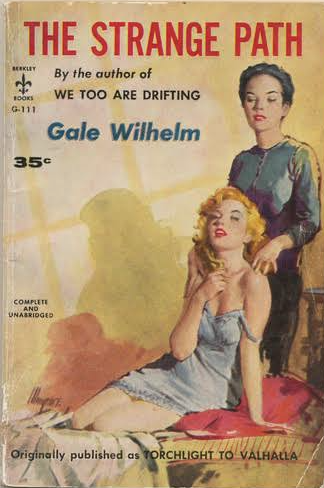
I hadn’t heard of these novels because they’ve been deliberately buried over time; only me and about 4 older dykes knew about Beebo, and none of us have money for statues. Naiad Press and the Ladder went under in the 2000s and 70s, respectively, and Bella Books, their successor, didn’t continue that publication. The Hays Code, the moral panic of the Lavender Scare, and the comic code of authority killed any chance of happy endings for these lesbian characters, any chance of trans or POC representation, and forced authors to make each novel end in death, a commitment to a mental institution, or forced heterosexual compliance. This censorship and control also showed up in the covers and titles of each novel. The covers of these books often feature, again, a slim, conventionally attractive blonde woman in some pose of coercion or in a state of submission, for lack of a better term, in a compromising position with a brunette woman in a stance of power over the blonde. All of the titles had some form of suggestion to them: The Third Sex, Counterfeit Lesbian, Satan was a Lesbian (won’t lie, this book was trash, and I did, in fact, love it), This Bed We Made. Etc. I quickly discovered that even though these books were made for people like me, most of the covers and endings didn't reflect my experiences or my expression of love, due to censorship and conservative moral panic around queerness and queer bodies, and the marketing of these materials towards a male, not female audience.
After reaching that conclusion, I started to line up the lesbian pulp covers and the science fiction covers and began asking myself more questions. The two I kept circling back to were: What makes an image a ‘lesbian’ image? And what makes a story ‘Queer’?
Is it the visible act of two perceived women kissing? None of the lesbian pulp covers ever showed women kissing, but there was always a suggestion of intimacy. What are the ‘visibility markers’ for womanhood, and why do we have to adhere to them for something to still fit the narrative of a lesbian image for a straight audience? Does a character have to come out and proclaim their sexuality somewhere in the story for me to understand they’re within my community? Why is every movie and book I find about coming out? What am I supposed to do after I come out? What does forever and a day with a future partner look like for me? Where’s my Queer late-90s, early-2000s rom-com that gives me unrealistic relationship standards to hold my future partner up against? I’m sure whoever's reading this is as tired of my unanswered questions as I was by this point.
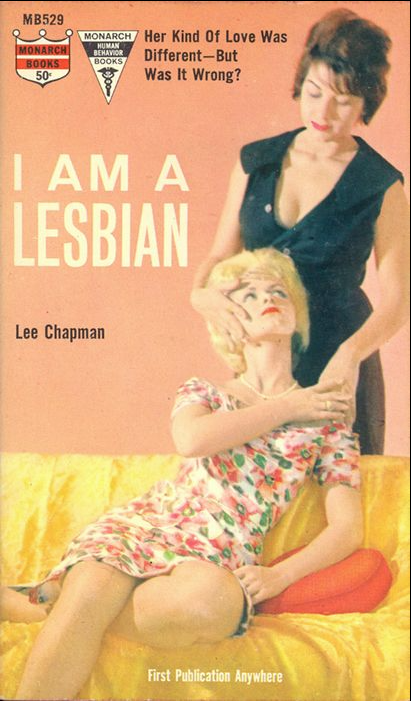
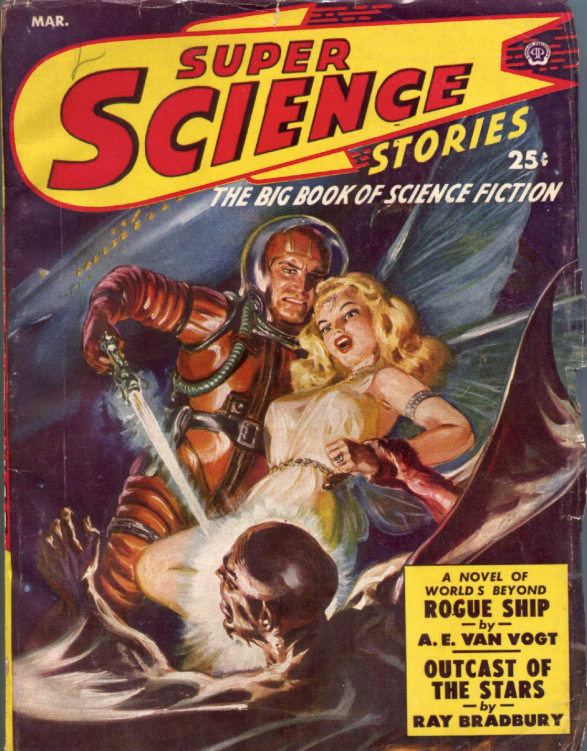
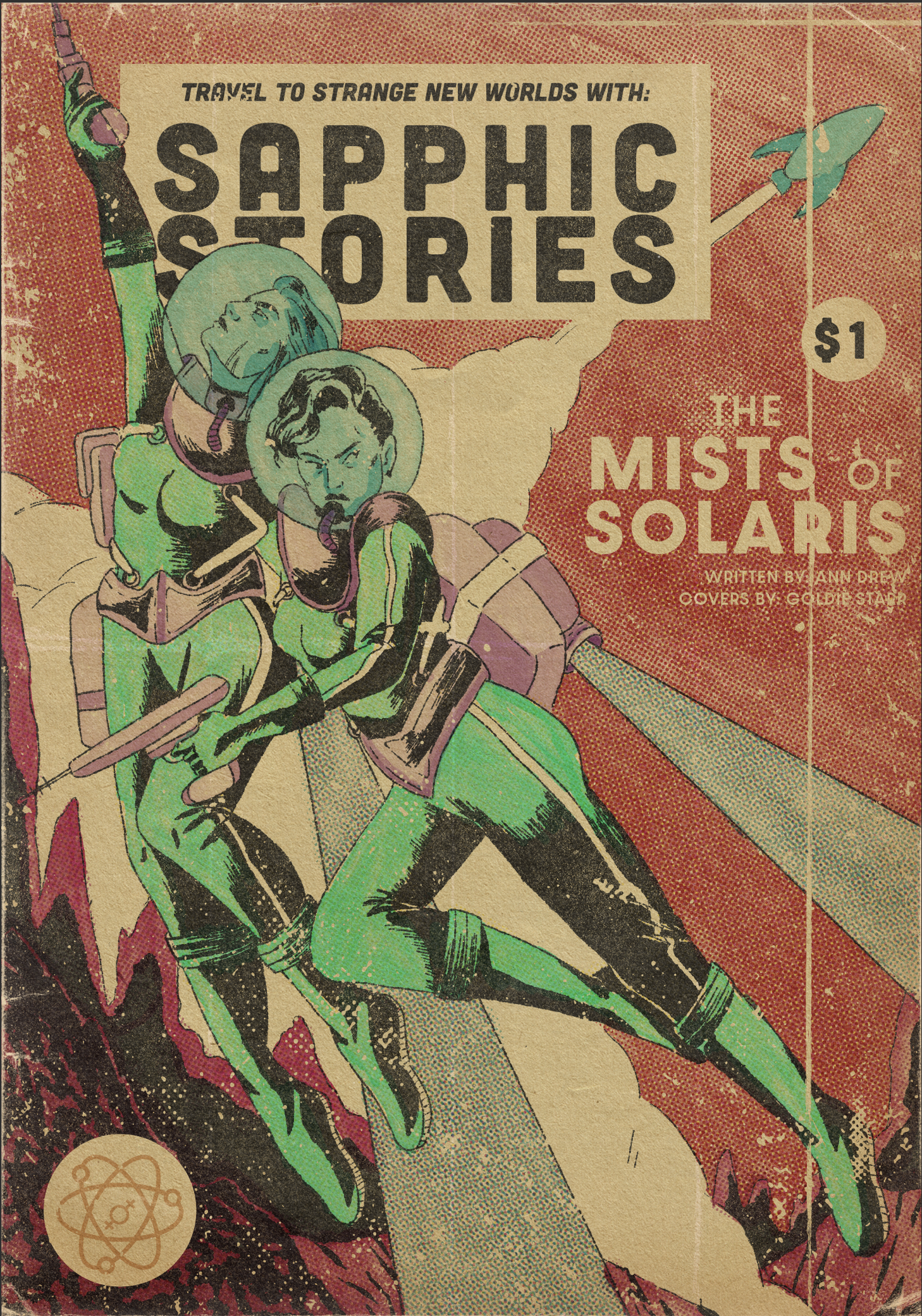
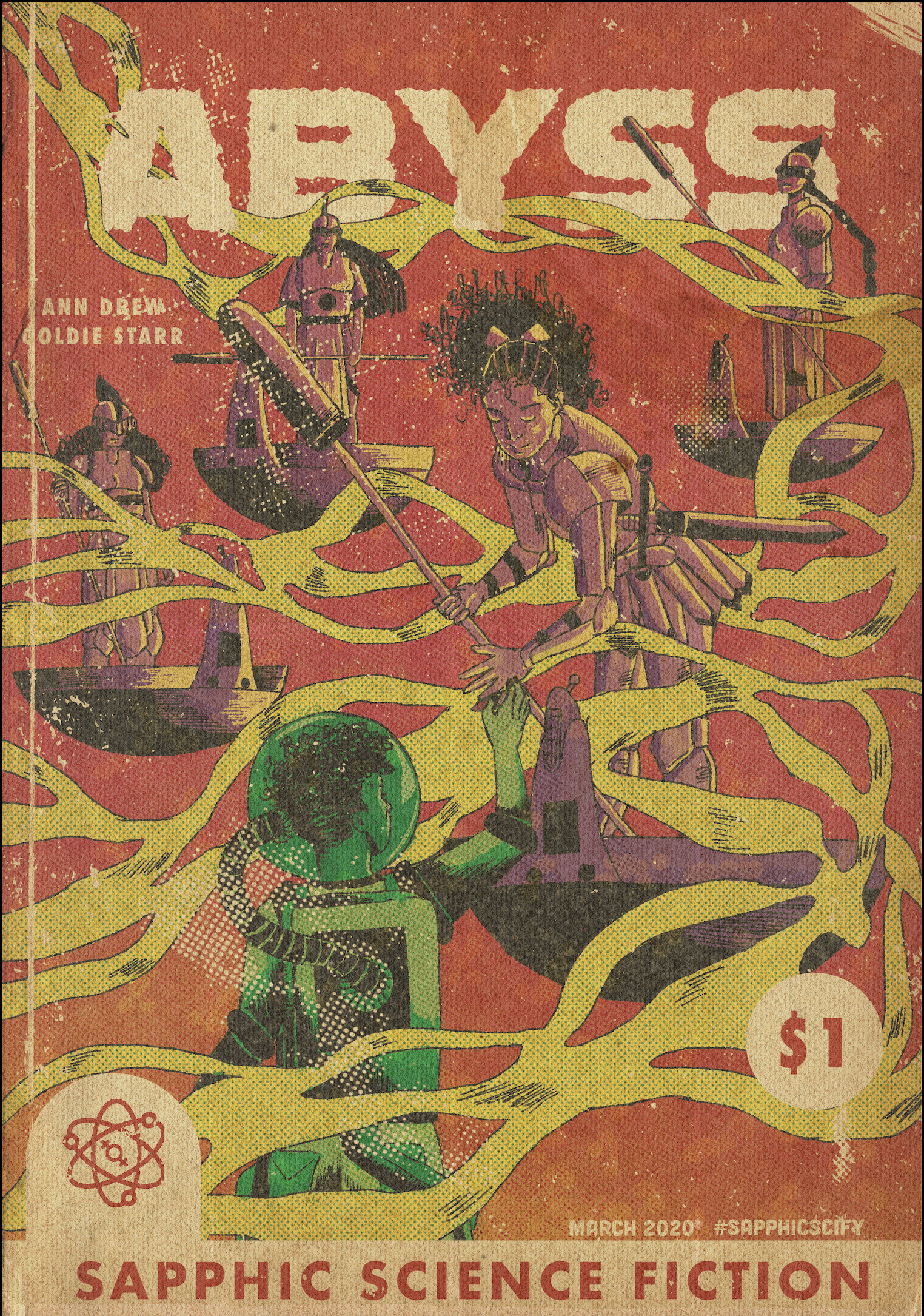
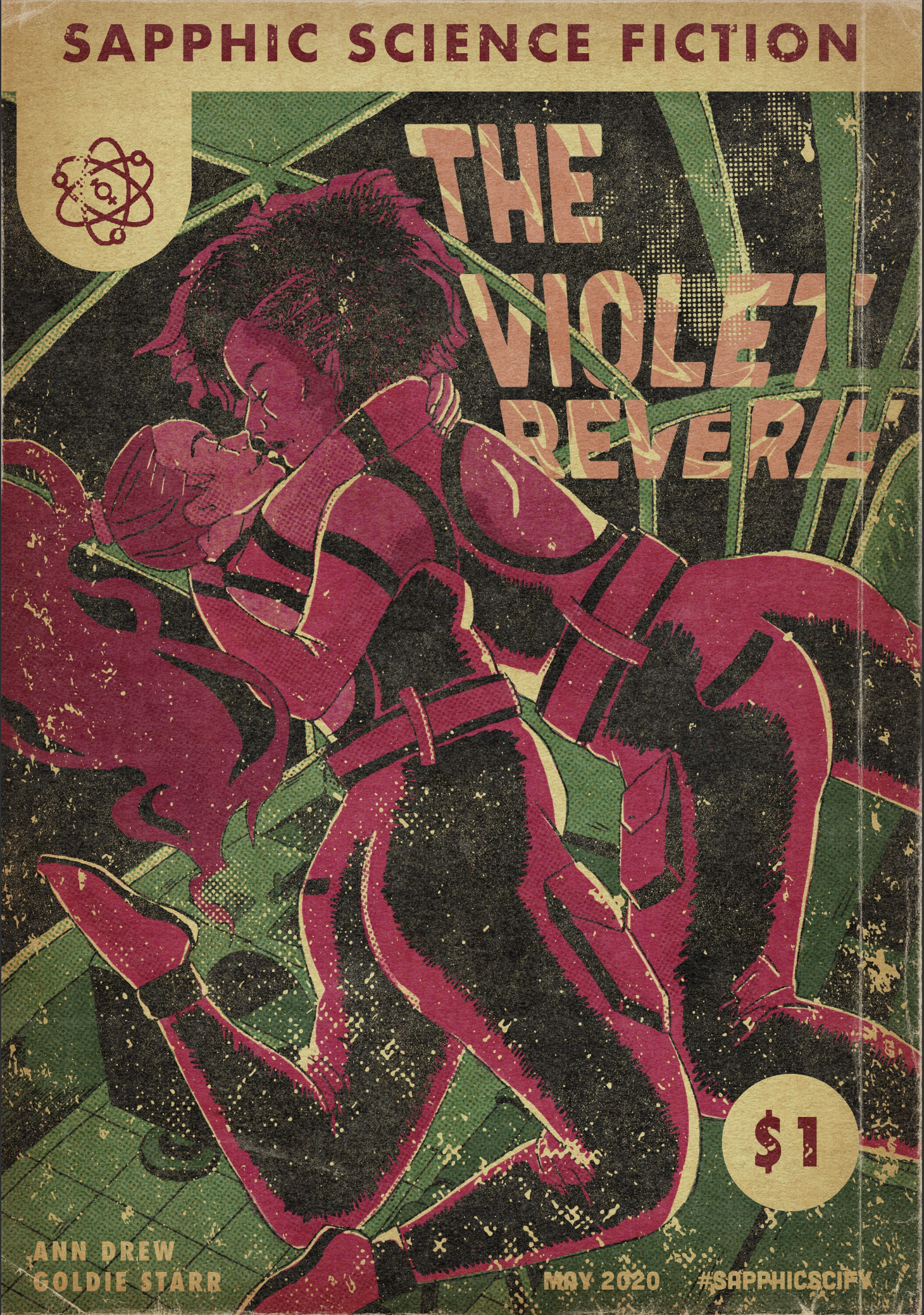
orginal Sapphic Scify Comics Cover Series
2020 — 2021
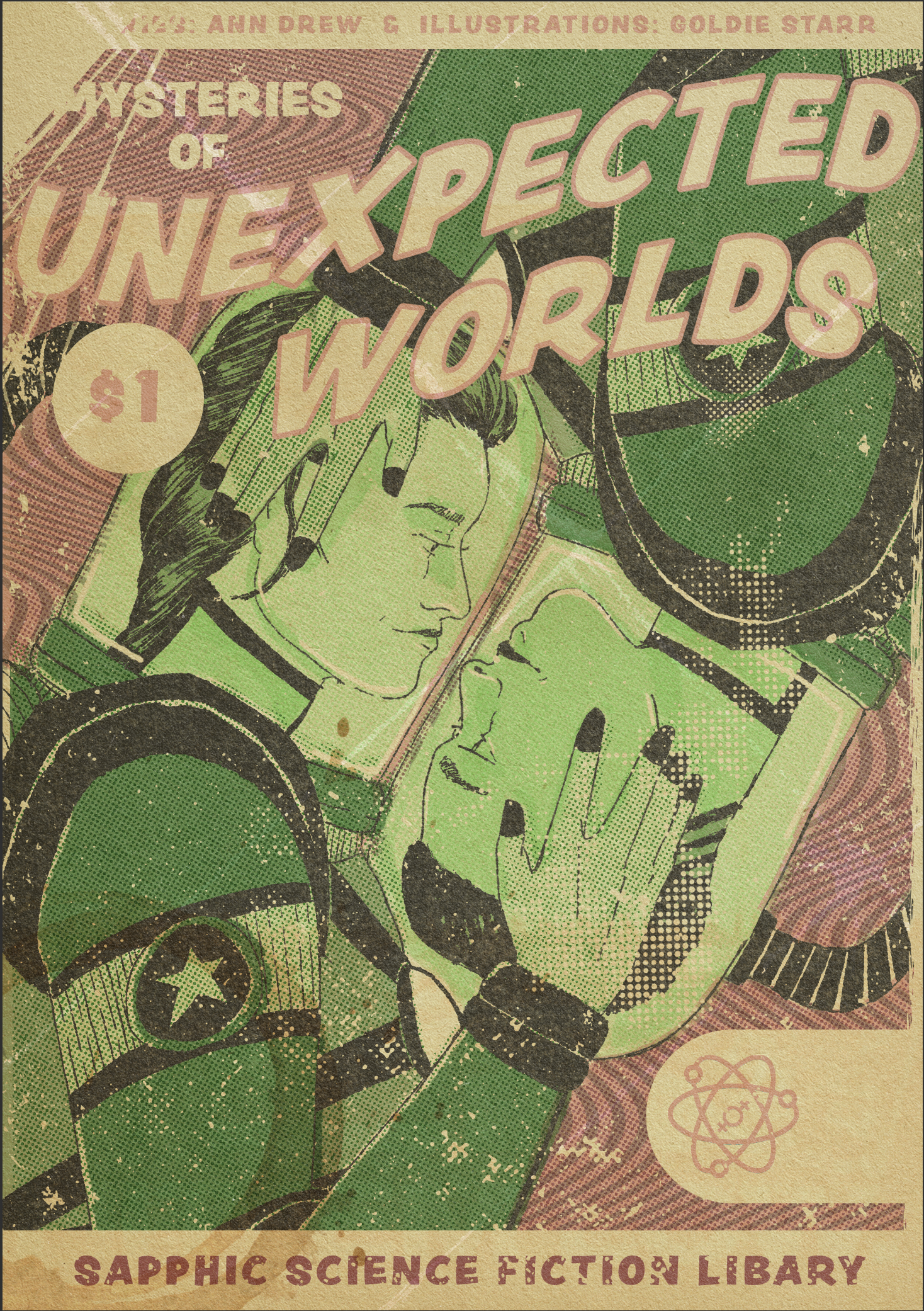
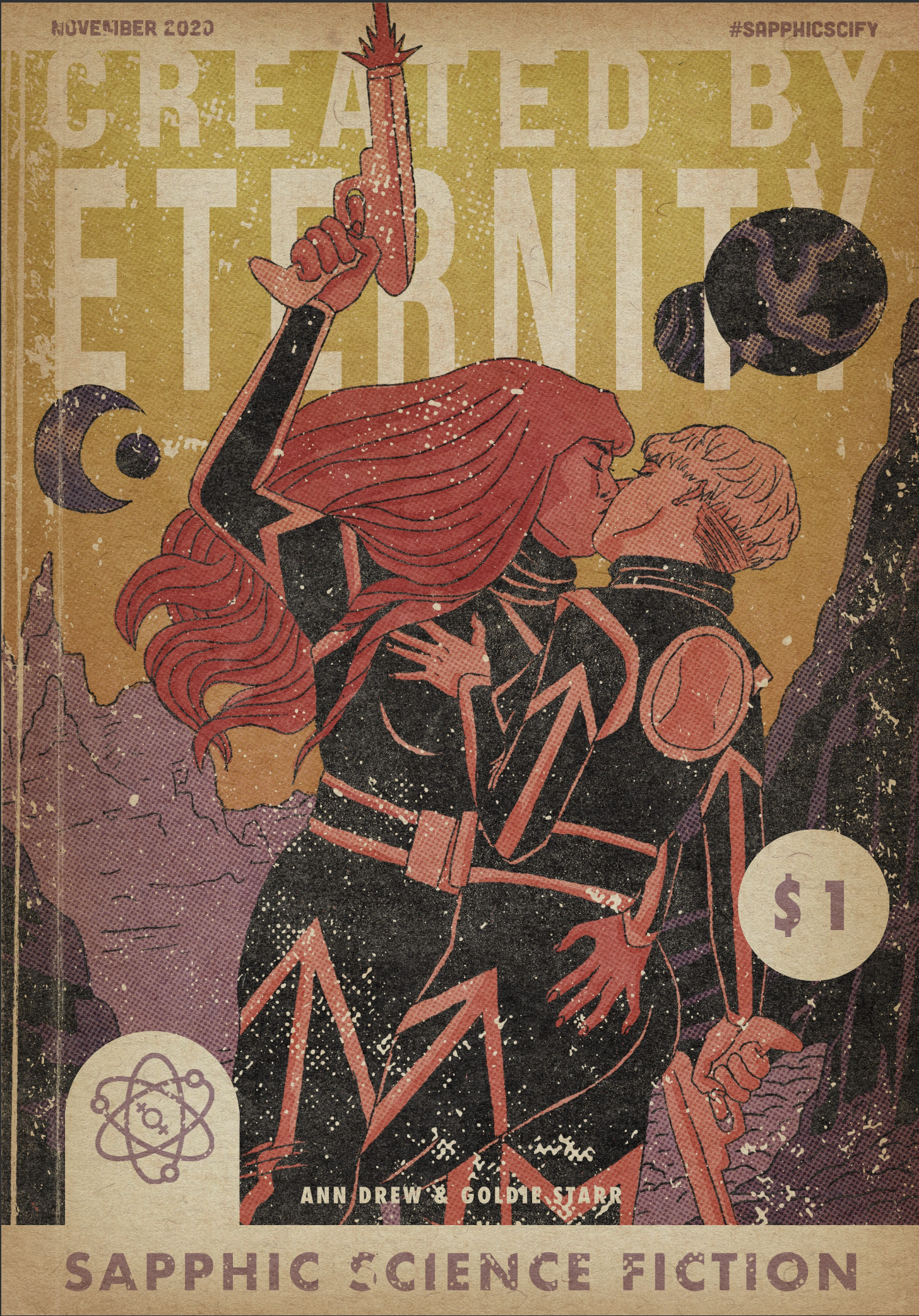
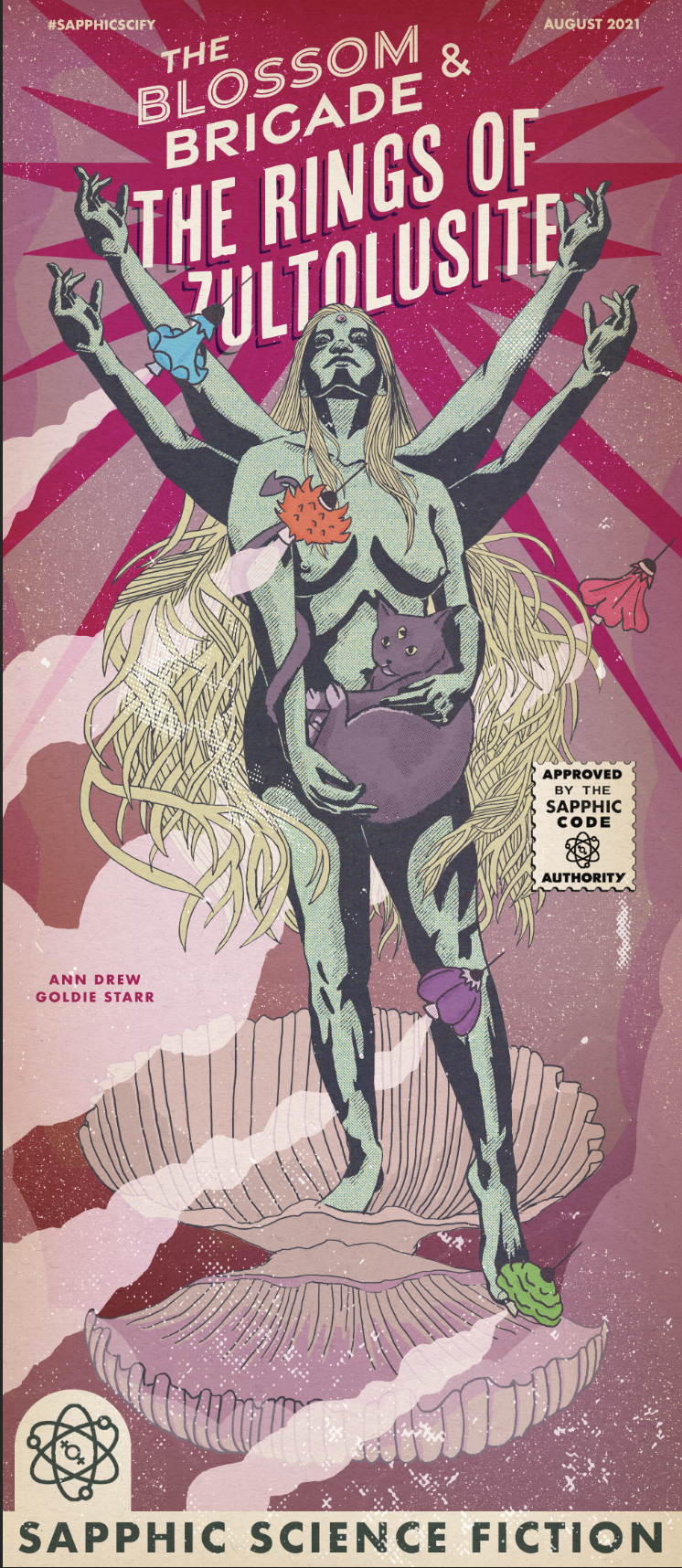
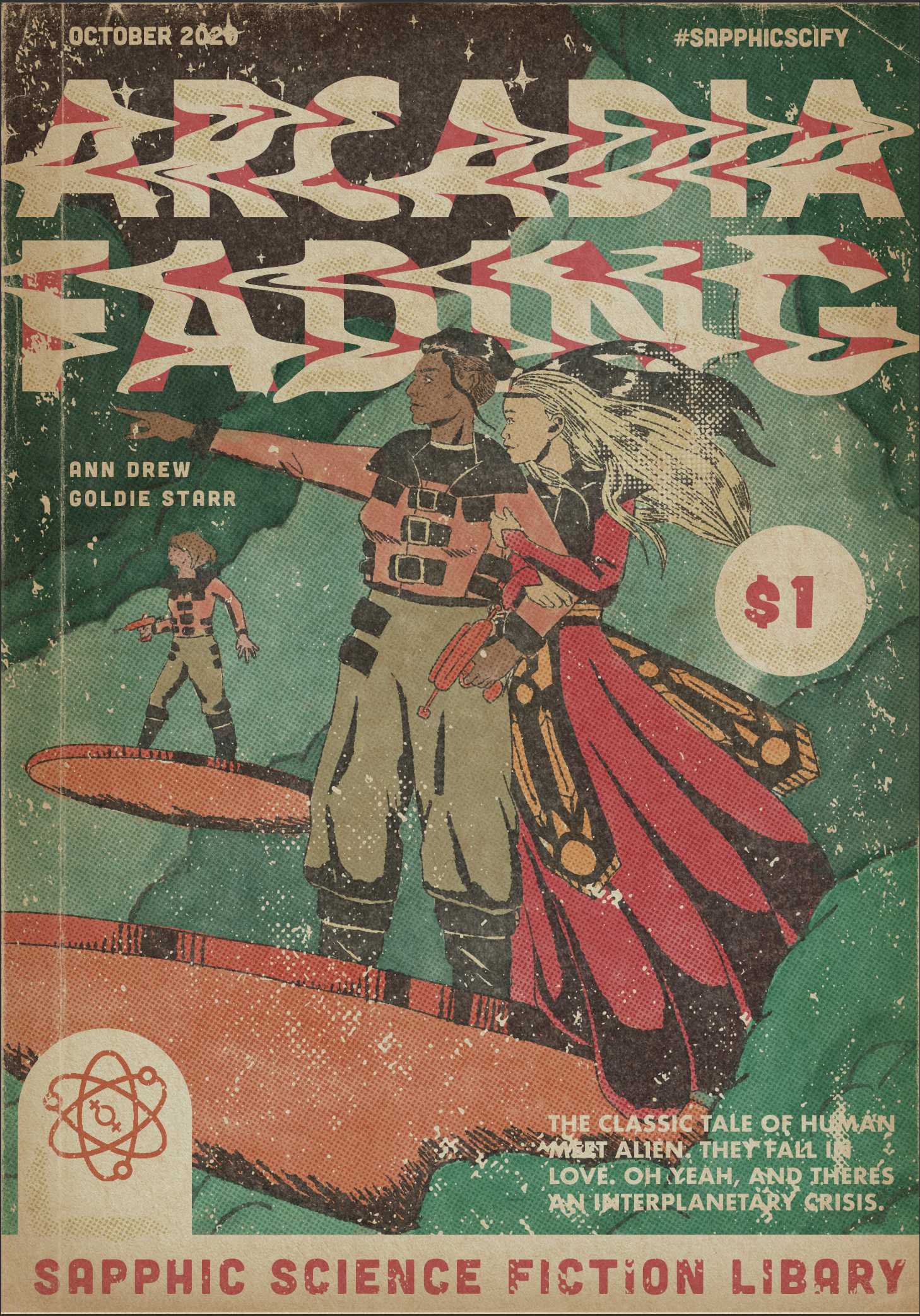
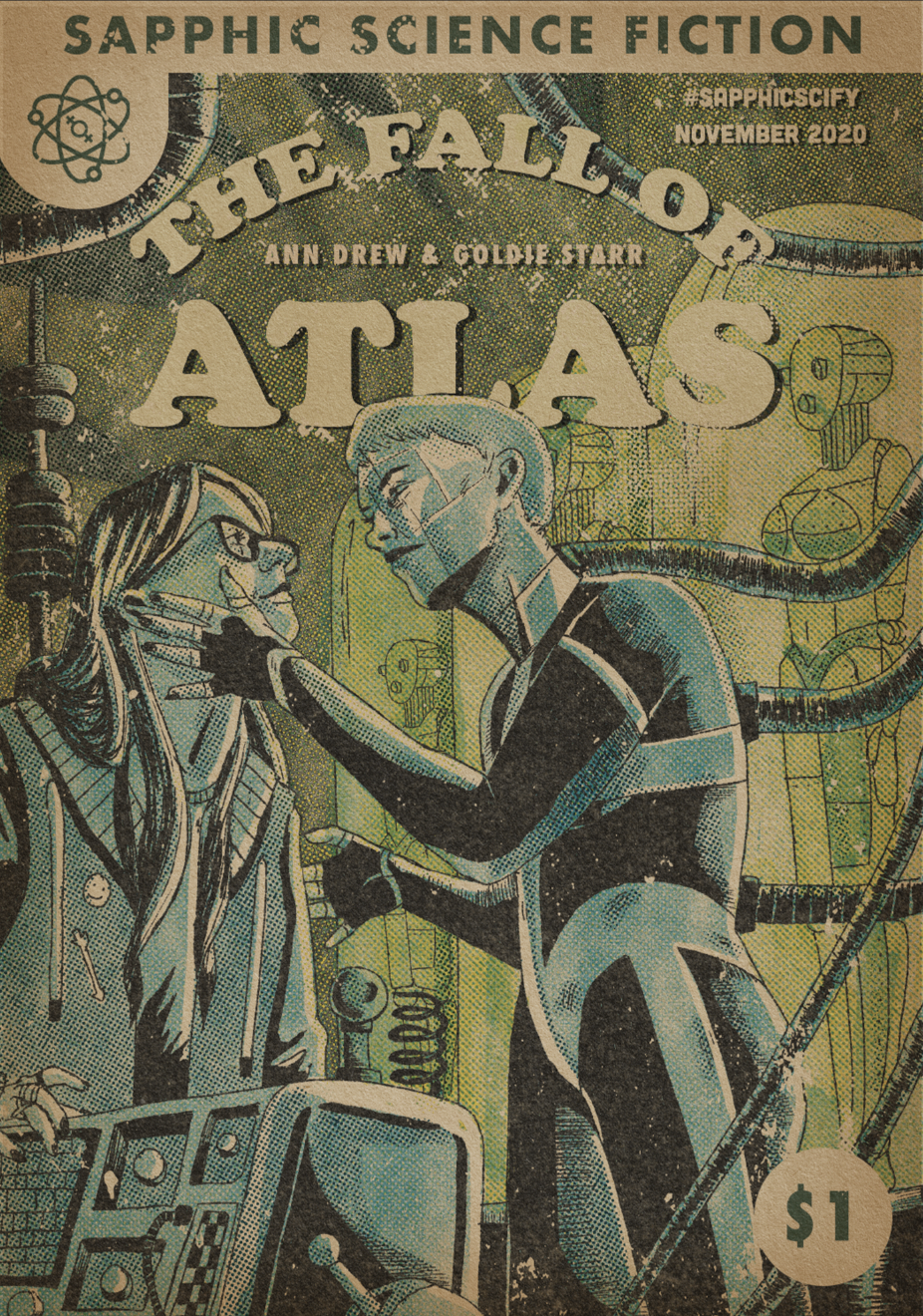
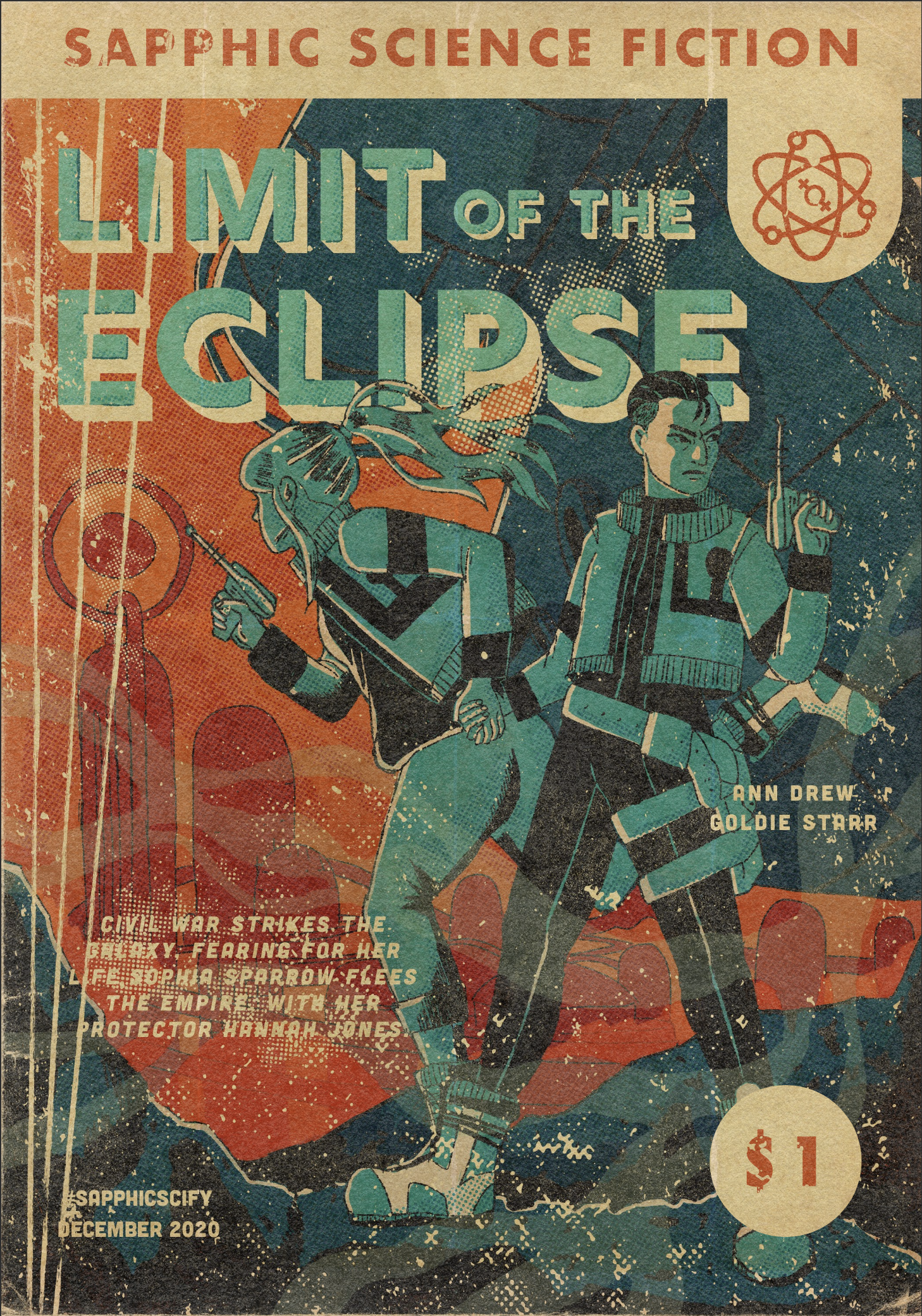
What I would prefer to see
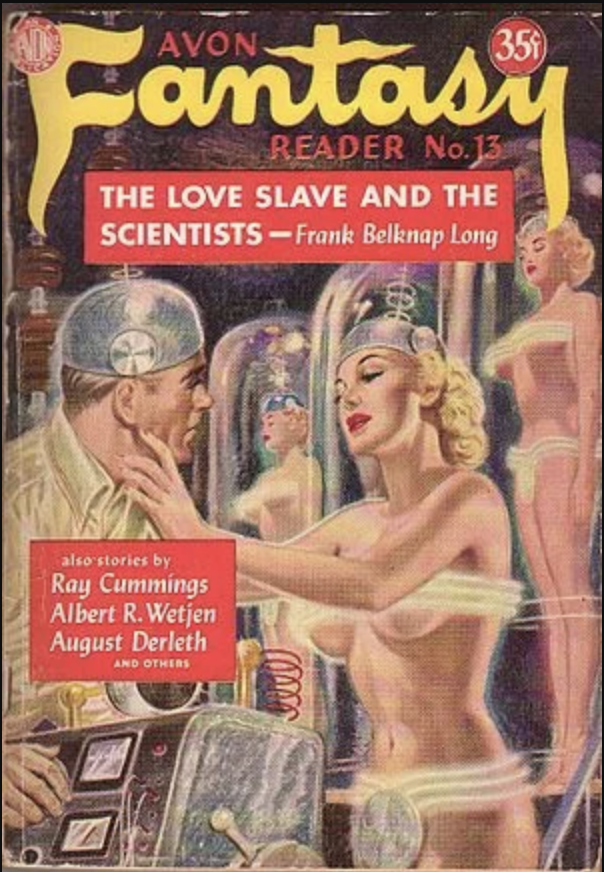
After asking myself so many questions and finding no satisfactory answers, I decided to start combining these two interests, which led to a great time for me but also an insane number of questions from some of my graduate professors. I started the original Sapphic Scify Cover series in the spring of 2020 and worked on it through the summer and into the fall. The images above and to the left are a selection of my favorites from that time. I don’t remember how many I made. I entered a kind of revisionist history trance, living half in the COVID-riddled world and half in the idea of creating covers for books that didn’t exist, in a fictional realm of faux authors communicating about the books they were writing, their daily lives, and what their partner made them for dinner. The process involved scouring the internet for science fiction cover archives, finding elements and poses I liked, and then transforming them into new images featuring lesbian figures and powerful women, and, looking back now, a shocking lack of aliens. To the right, I have included an example of this process to show the changes I made to my versions for this series.
Orginal Image
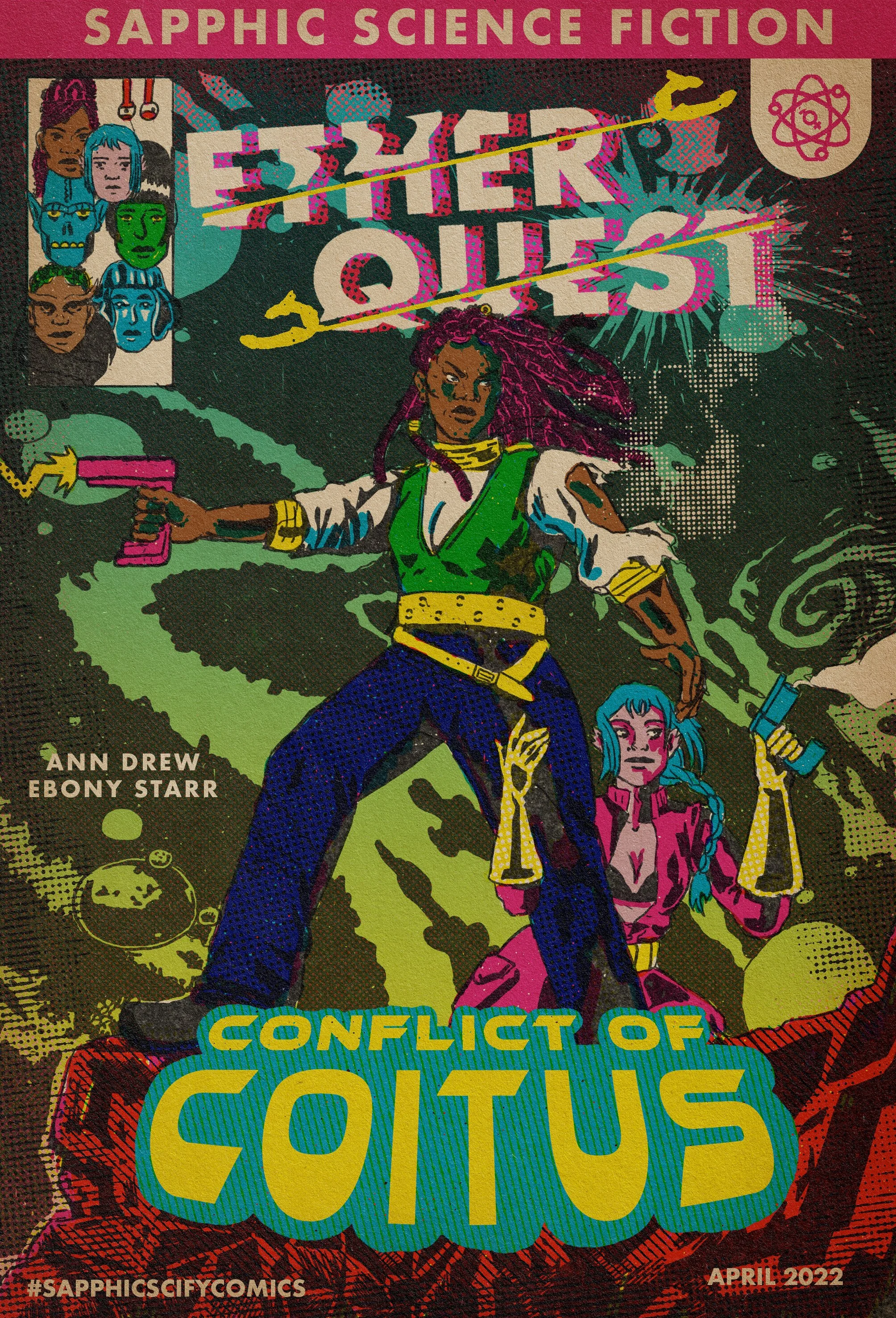
2021 — 2022
Ether Quest: Conflict of Coitus
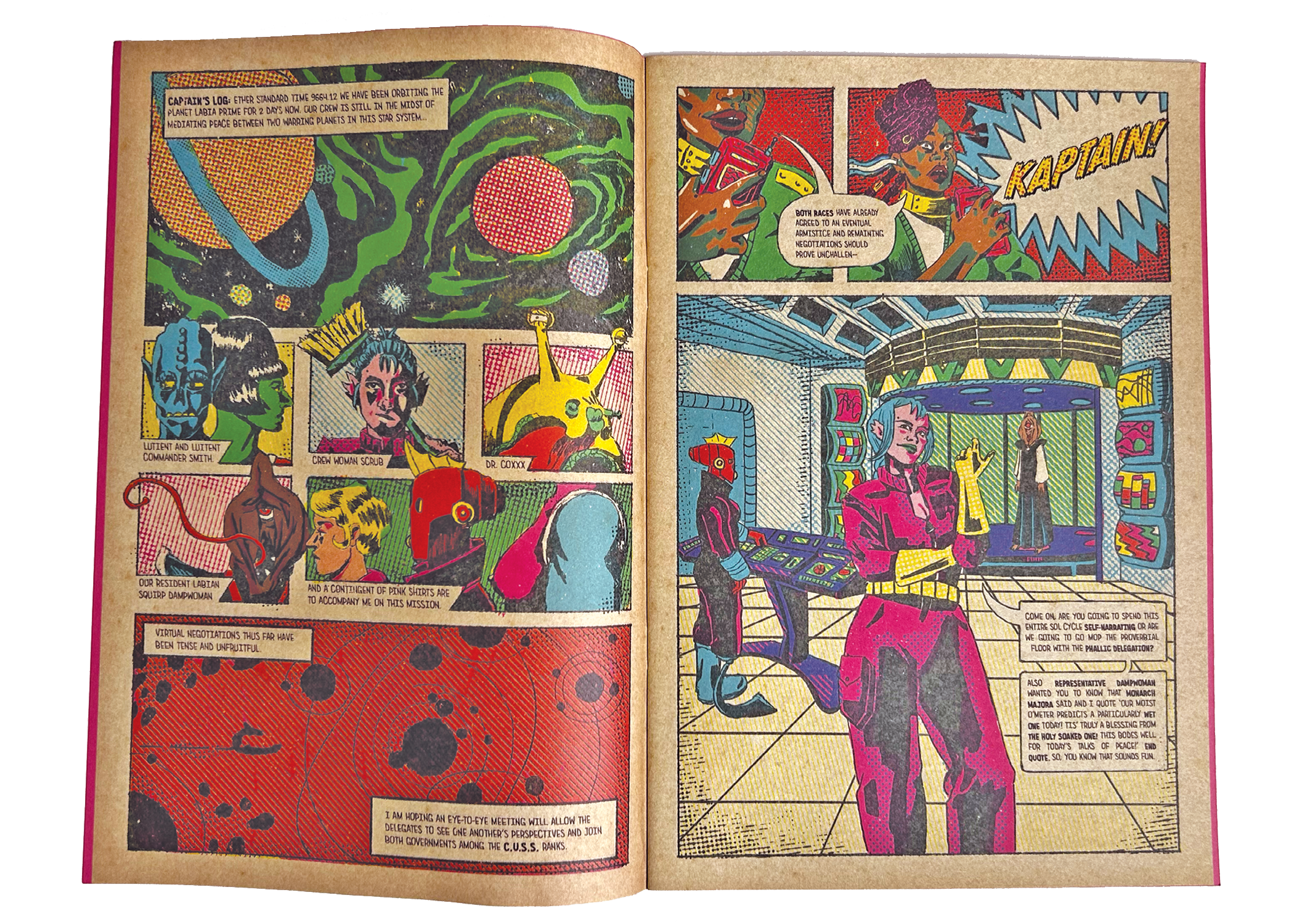
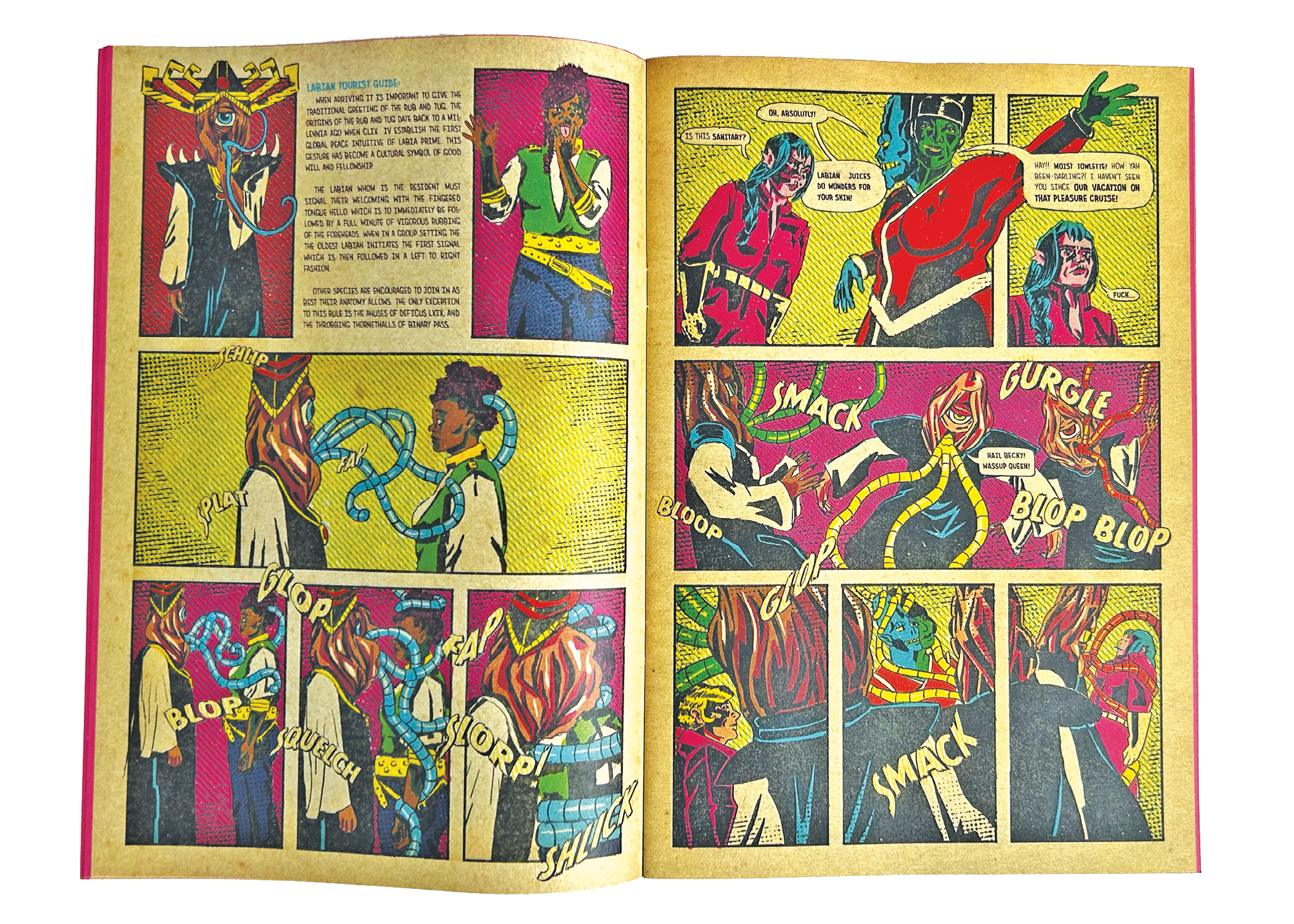
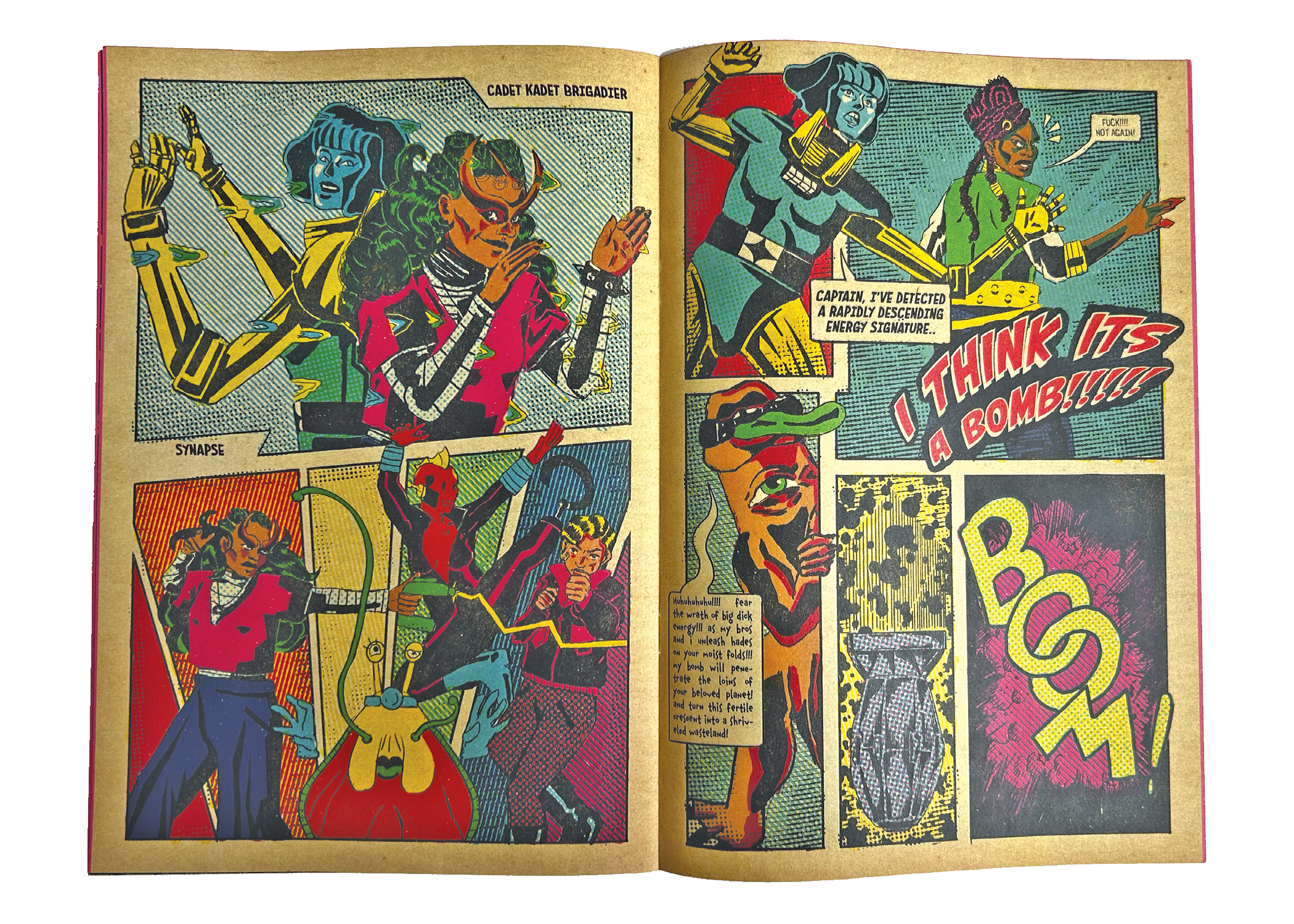
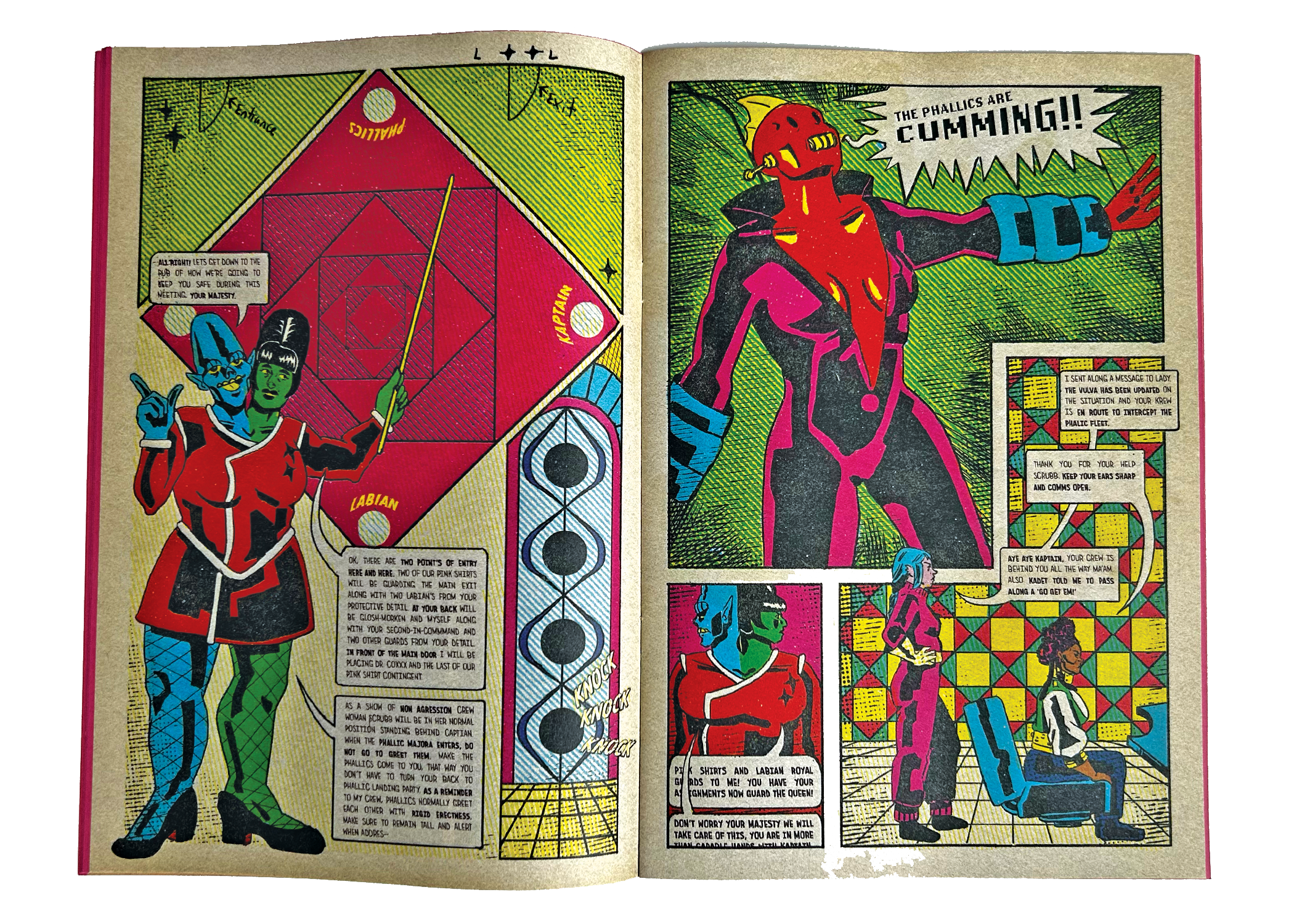
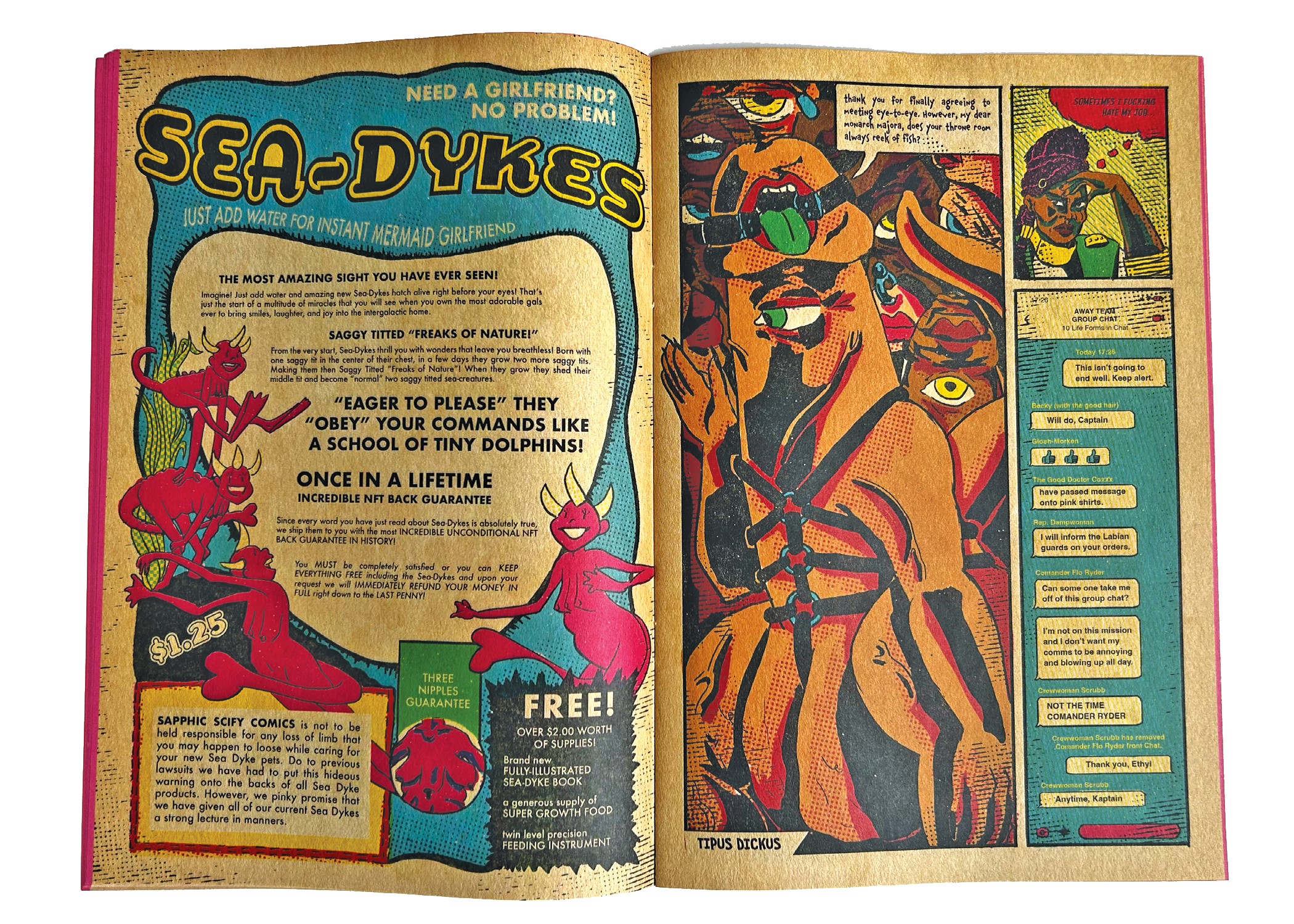
As spring 2022 approached and my graduation date loomed, I had to start planning and declaring my MFA thesis project. I went into graduate school knowing I wanted to make a comic, but I had no idea what topic or theme to pursue. The idea for Ether Quest came to me one week after I stress-walked around the U of A campus a few times, worrying about making something profound instead of something fun.
My general pitch for my graduate committee was as follows:
“Ether Quest: A Conflict of Coitus Volume I follows Captain Kaptain and her crew of the Vulva as they vibe down to the planet Labia Prime to help broker a peace treaty between two warring alien races, the Labians and the Phallics.”
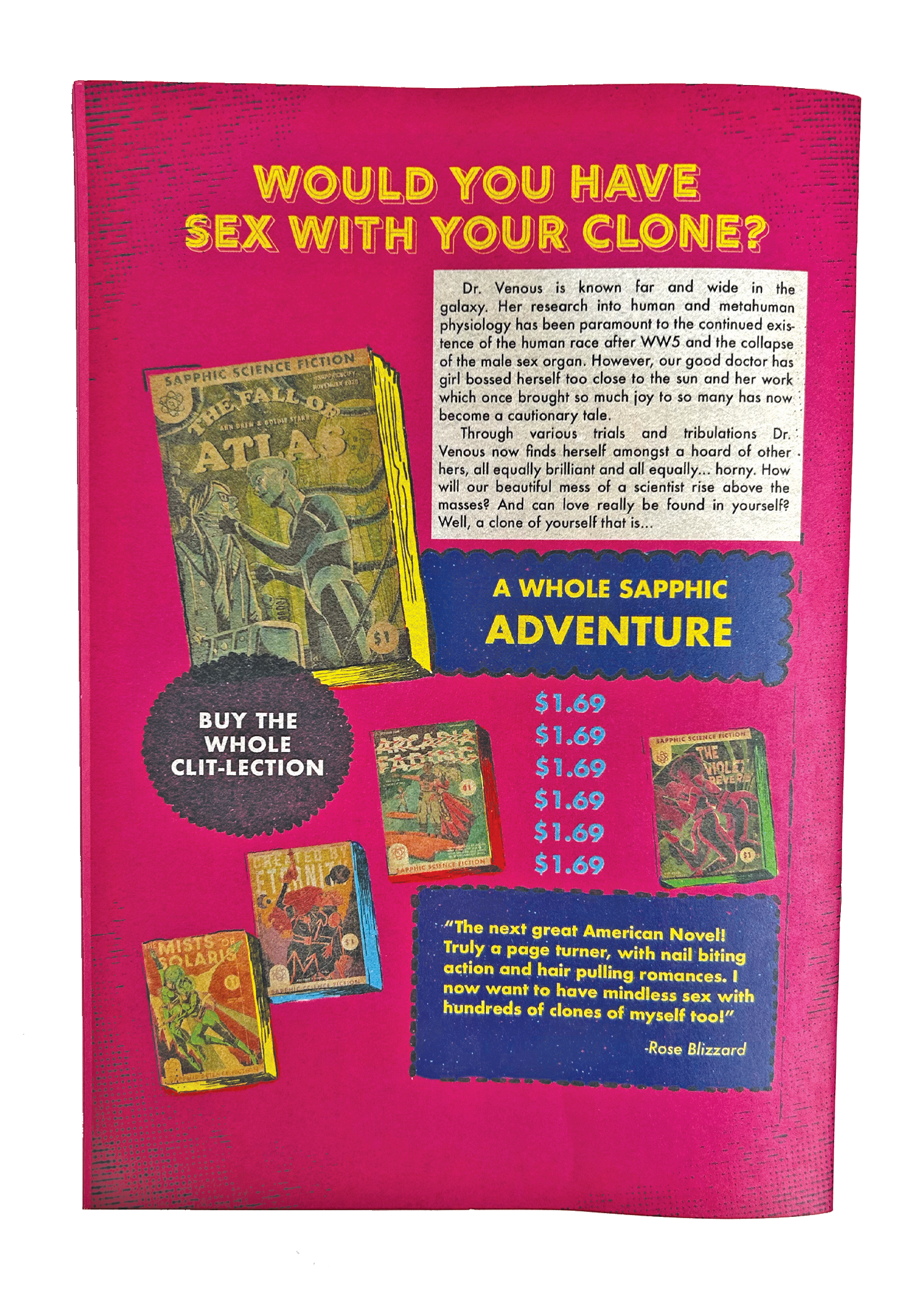
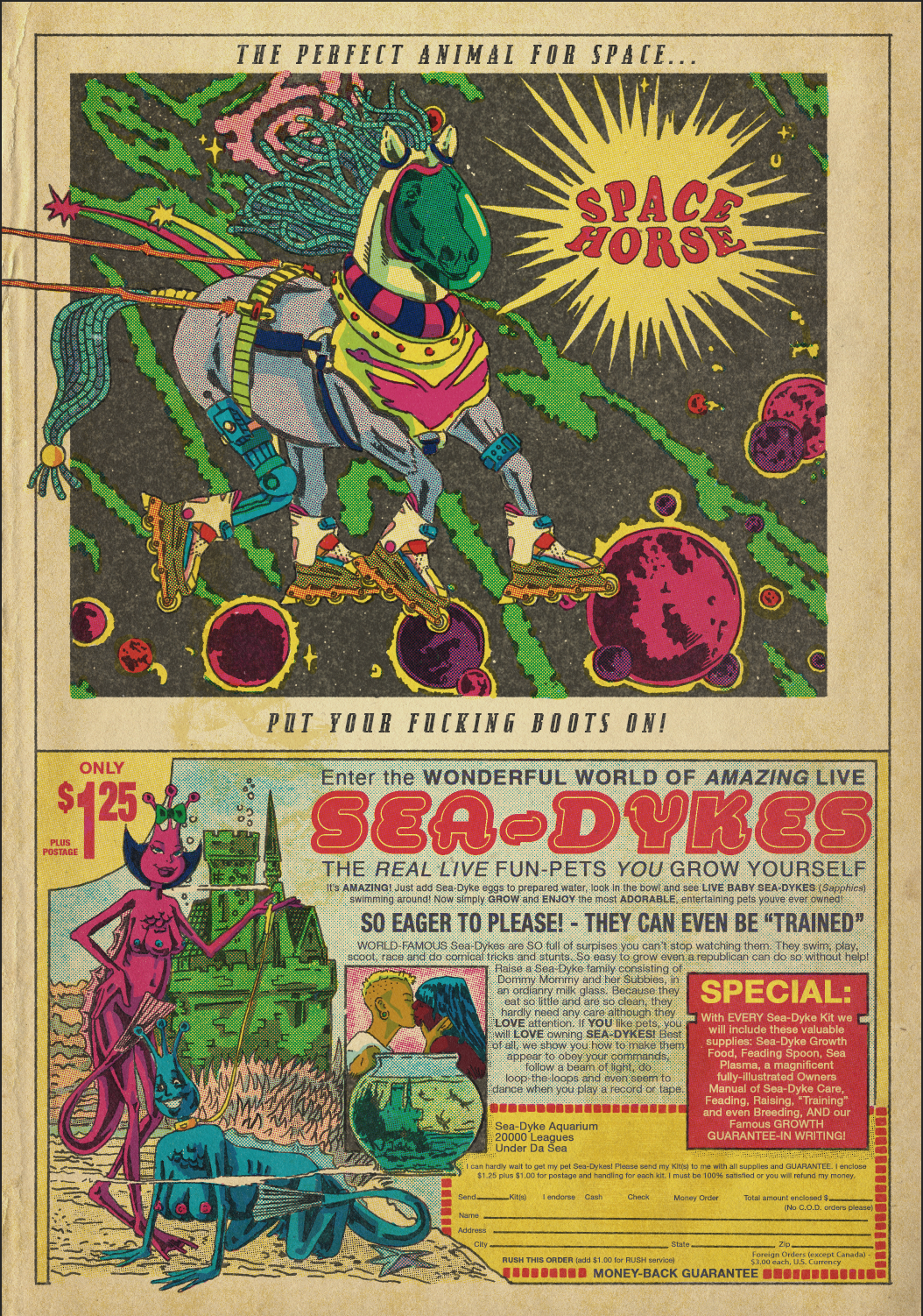
From there, I began the daunting task of creating a 32-page, pulp-inspired comic. Each page features textures and inky fuzz, scanned from vintage action comics and digitally added. I drew inspiration from real ads I found in my personal comic collection: Sea-Monkeys became Sea-Dykes; I made a crossword puzzle that I agonized over for two weeks (I later found a puzzle generator online after the fact and vowed never to make another); the comic's middle features a Flip-O-Gram action scene; I threw in a missed connections page for good measure, too.
The comic itself is printed on newsprint; this was and remains an important part of the final production aesthetic. I can’t count how many times the tactile and olfactory quality of the newsprint confuses potential readers about what time these comics come from.
You can read the full Ether Quest Comic here on my website.
2023 — 2025
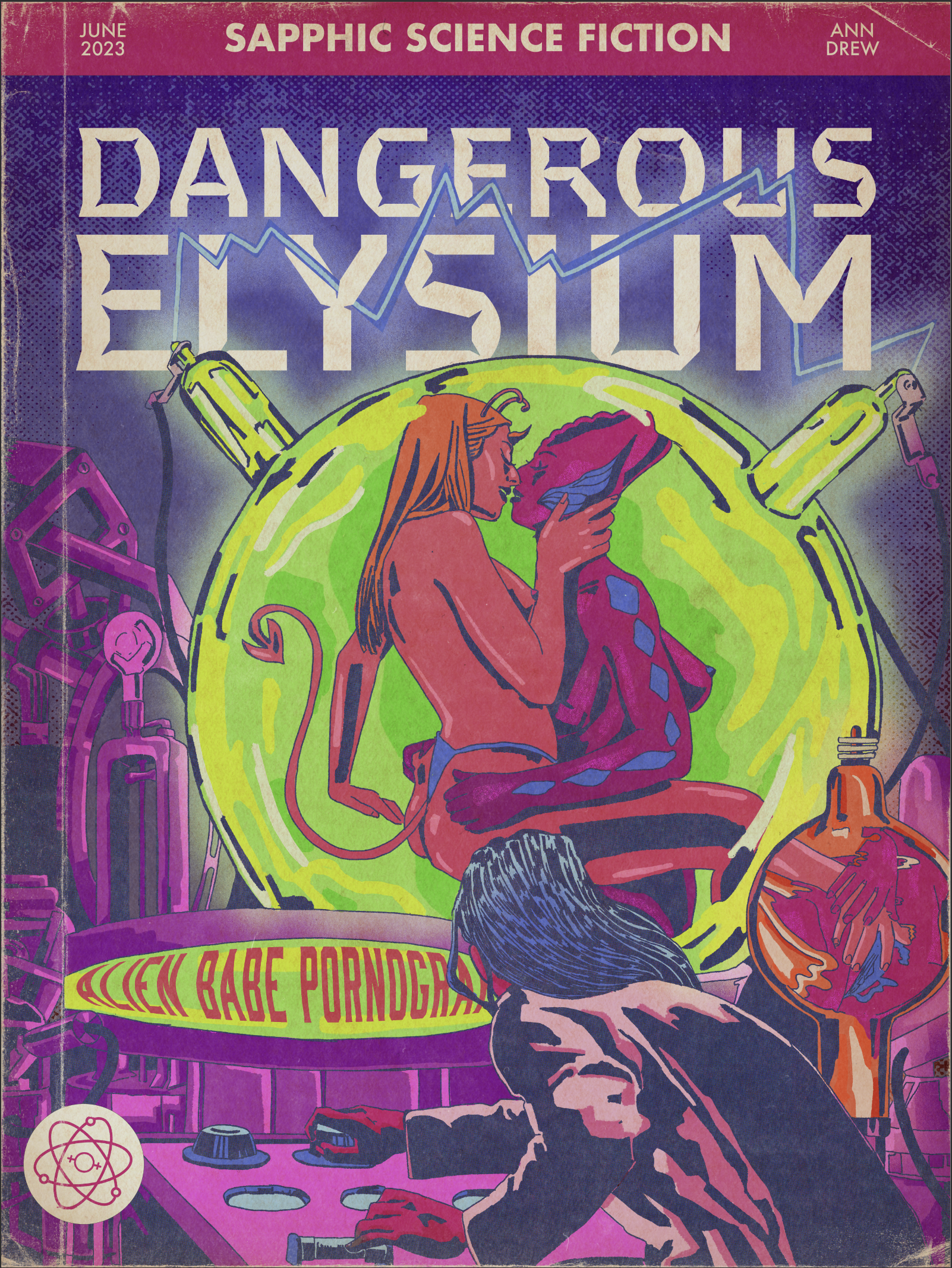
Sapphic Scify Comics Covers and ads : CONTINUED
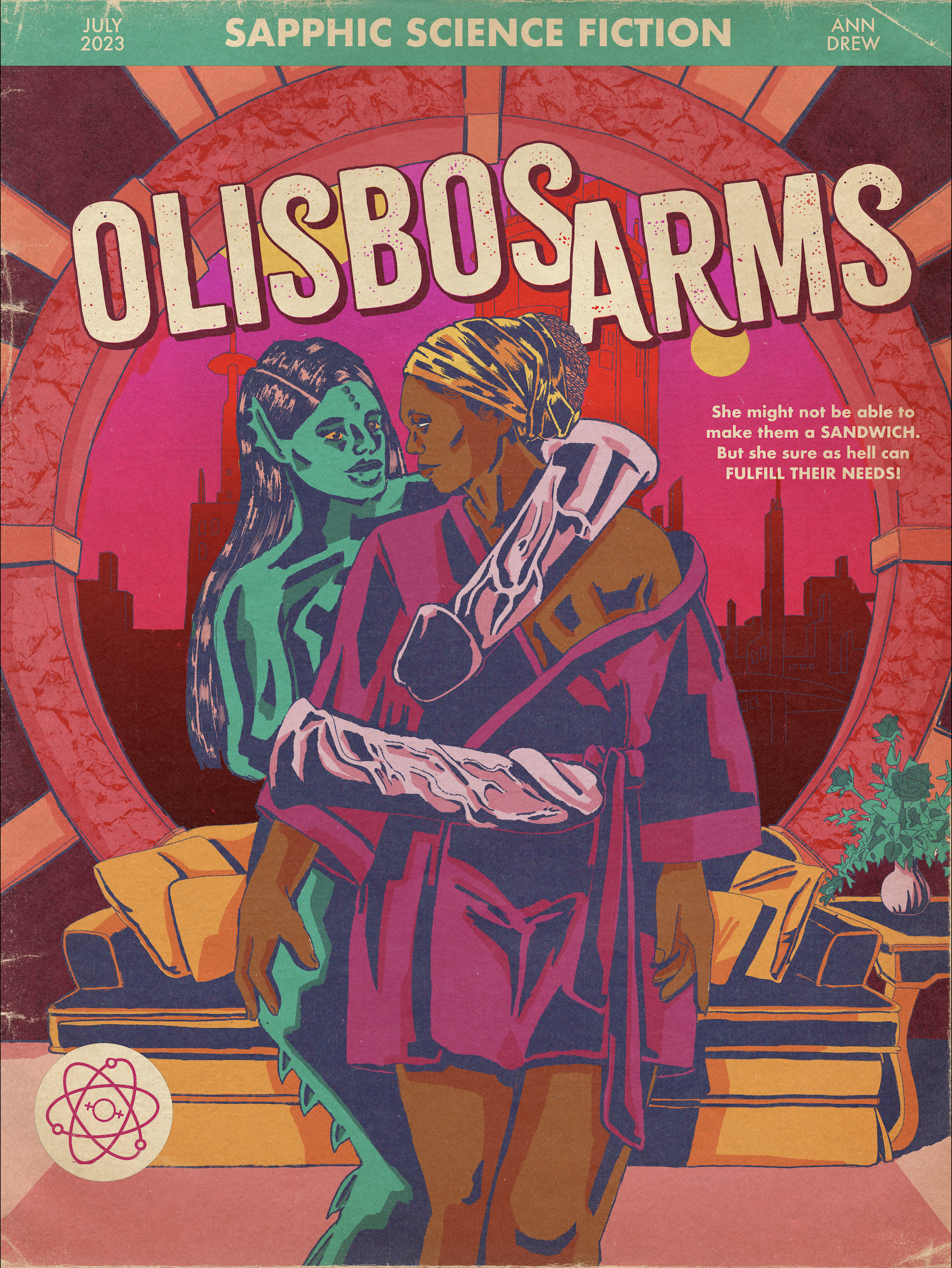
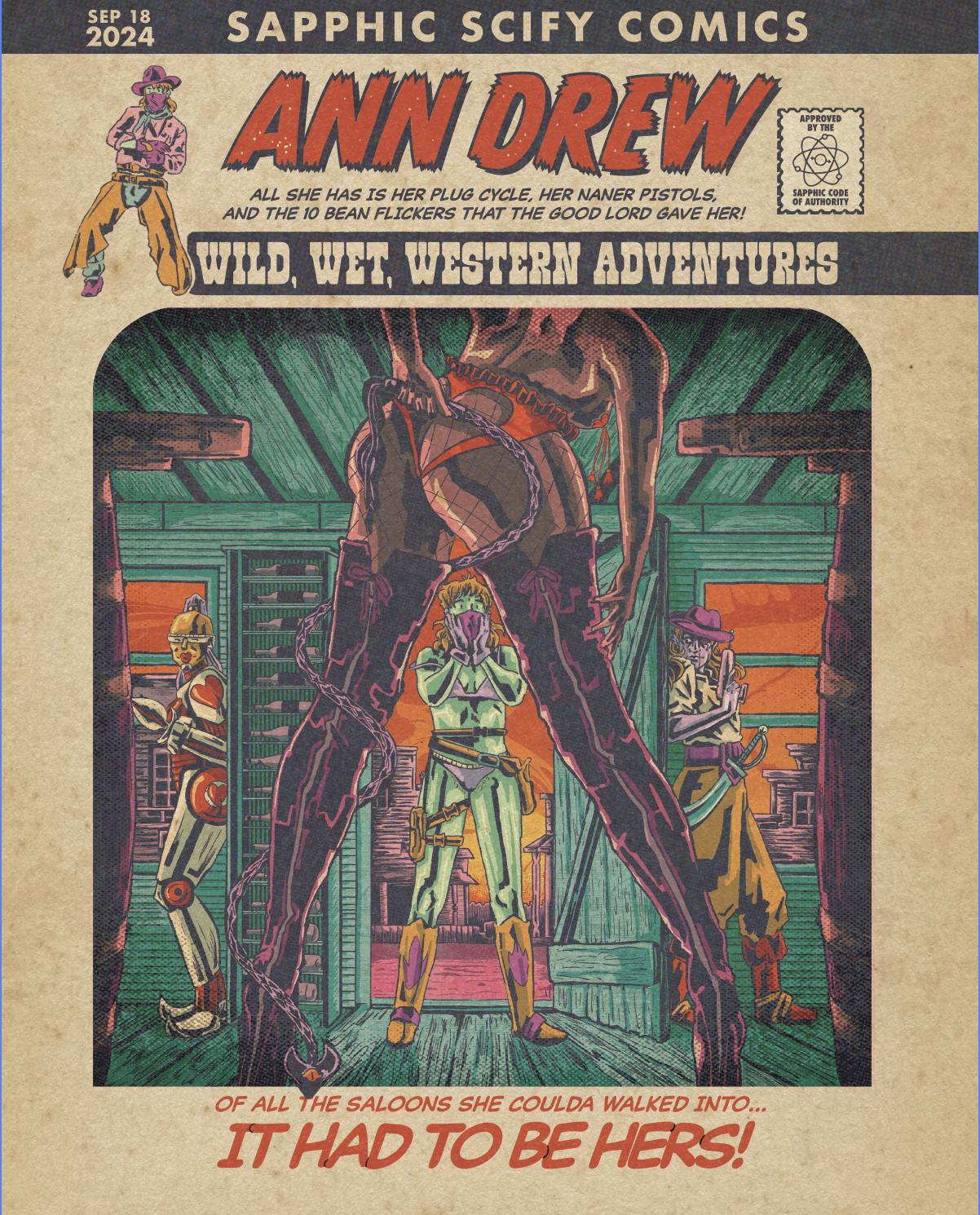
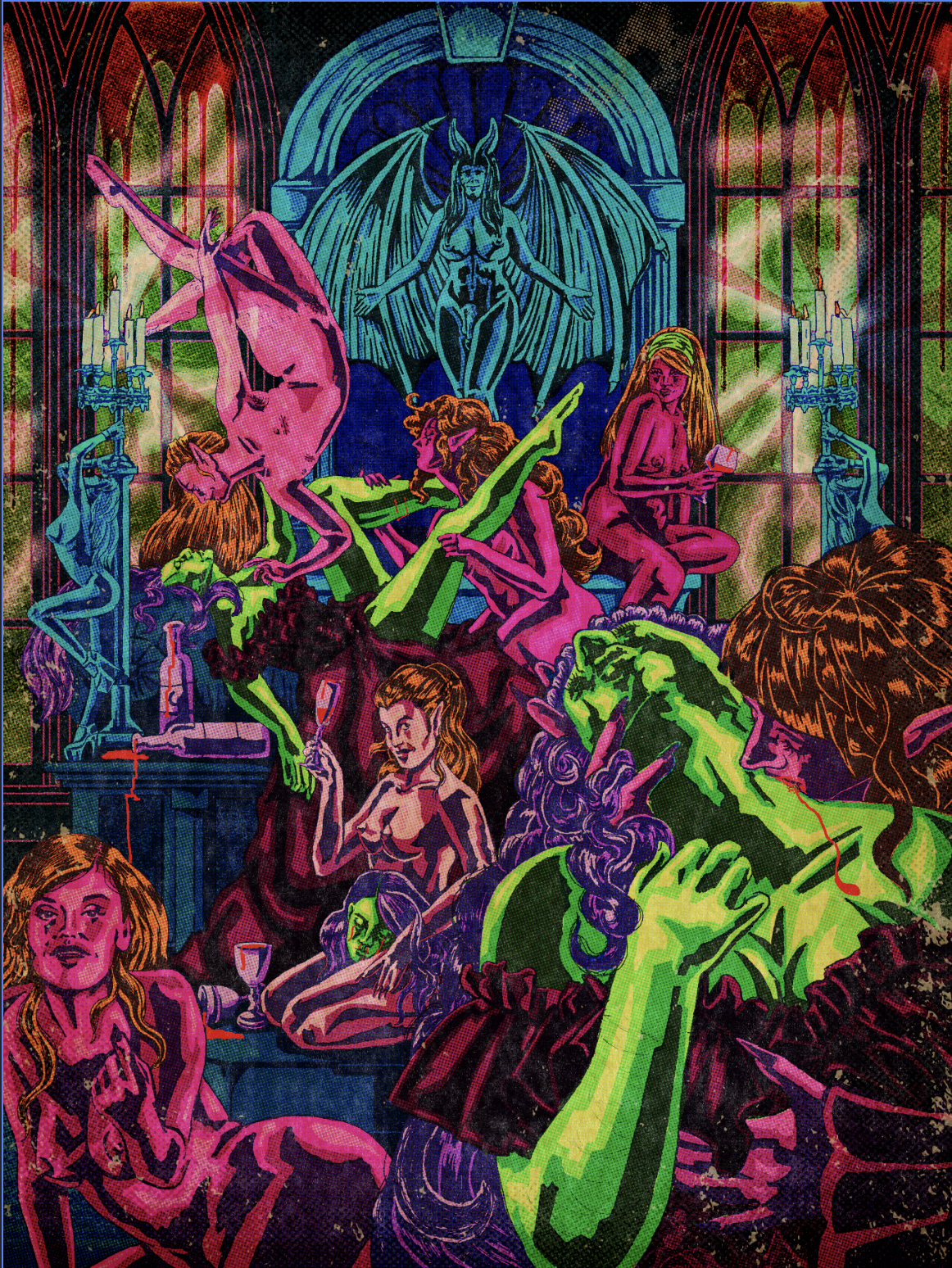
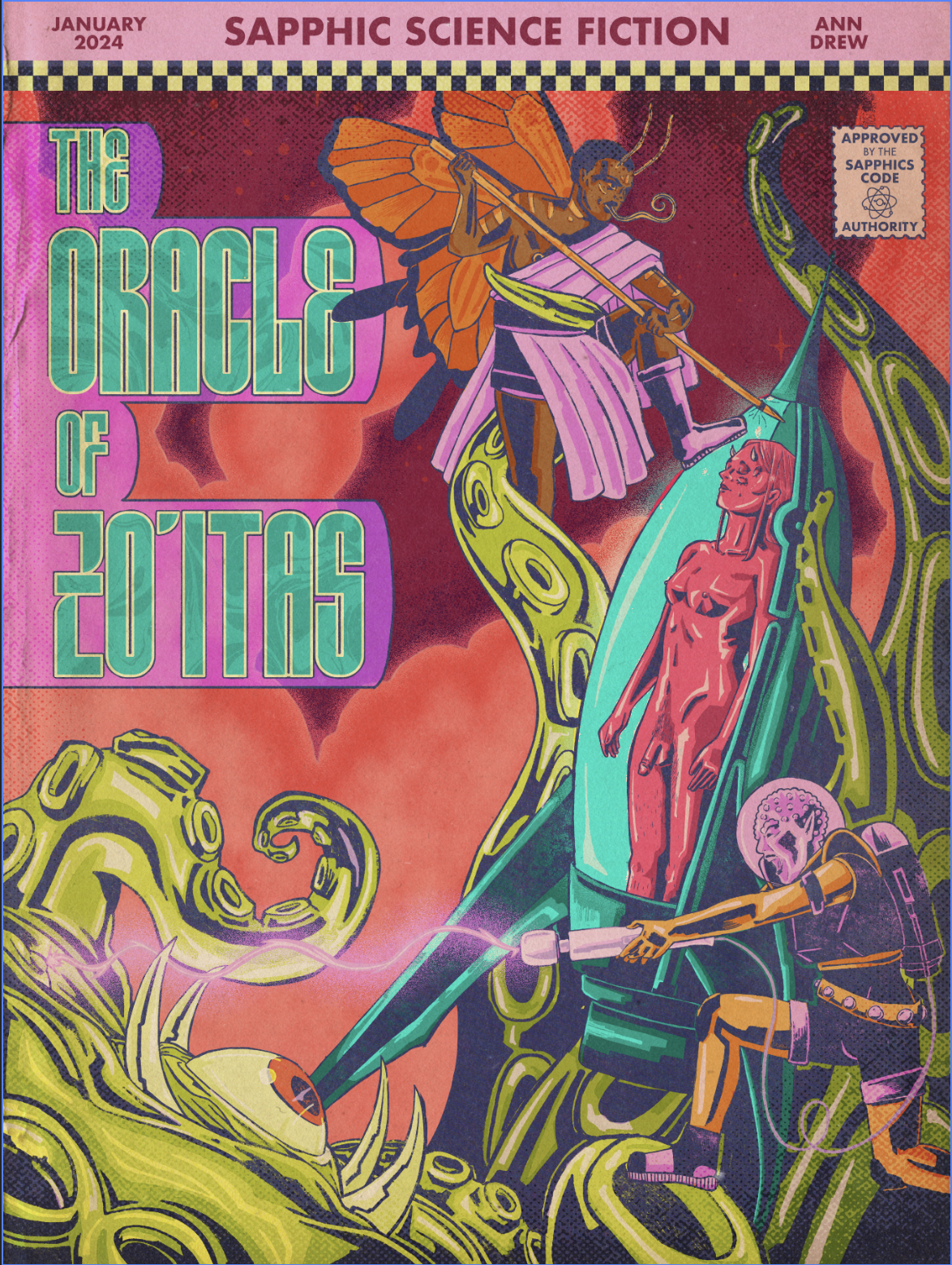
2023 — 2024
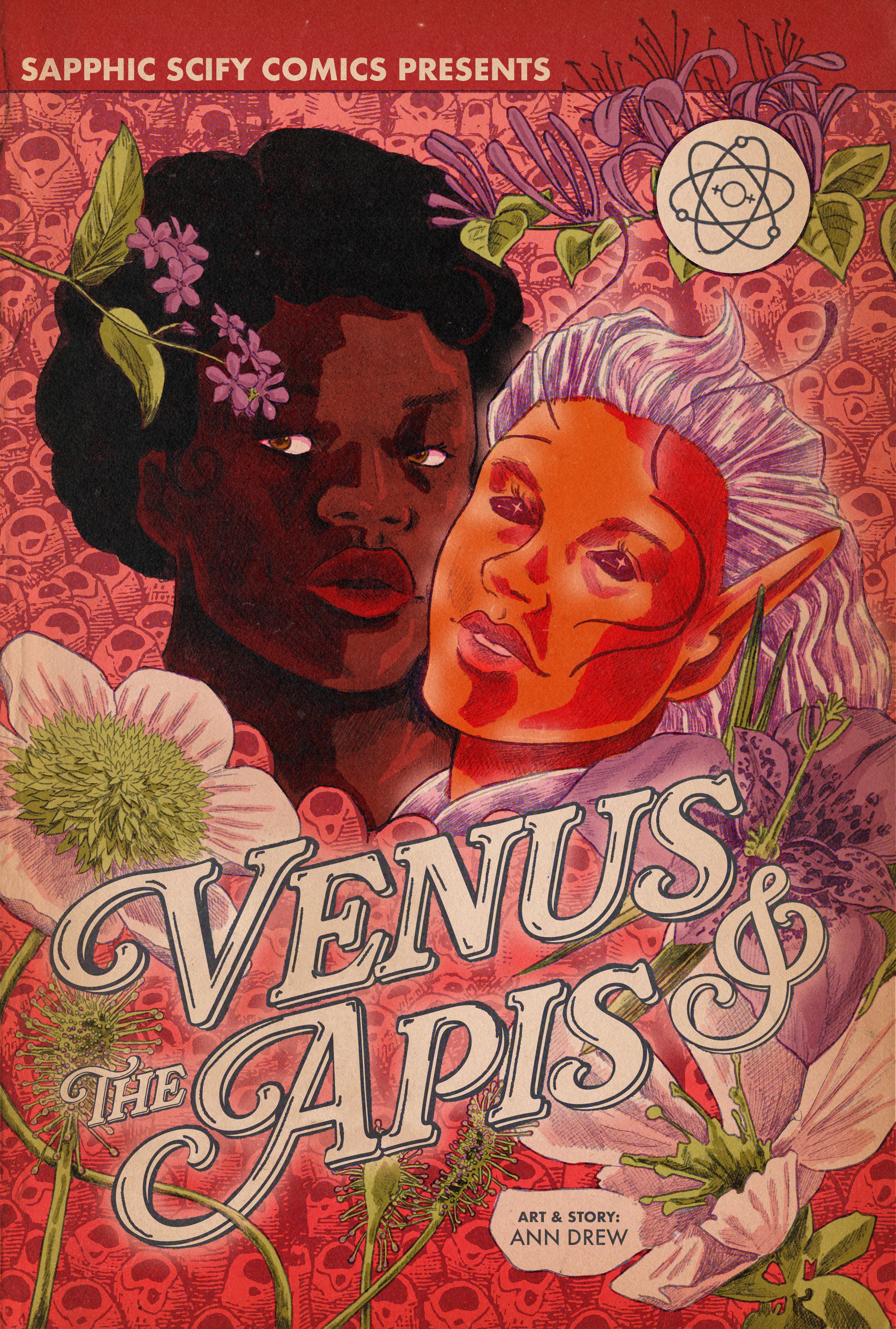
Venus and the Apis
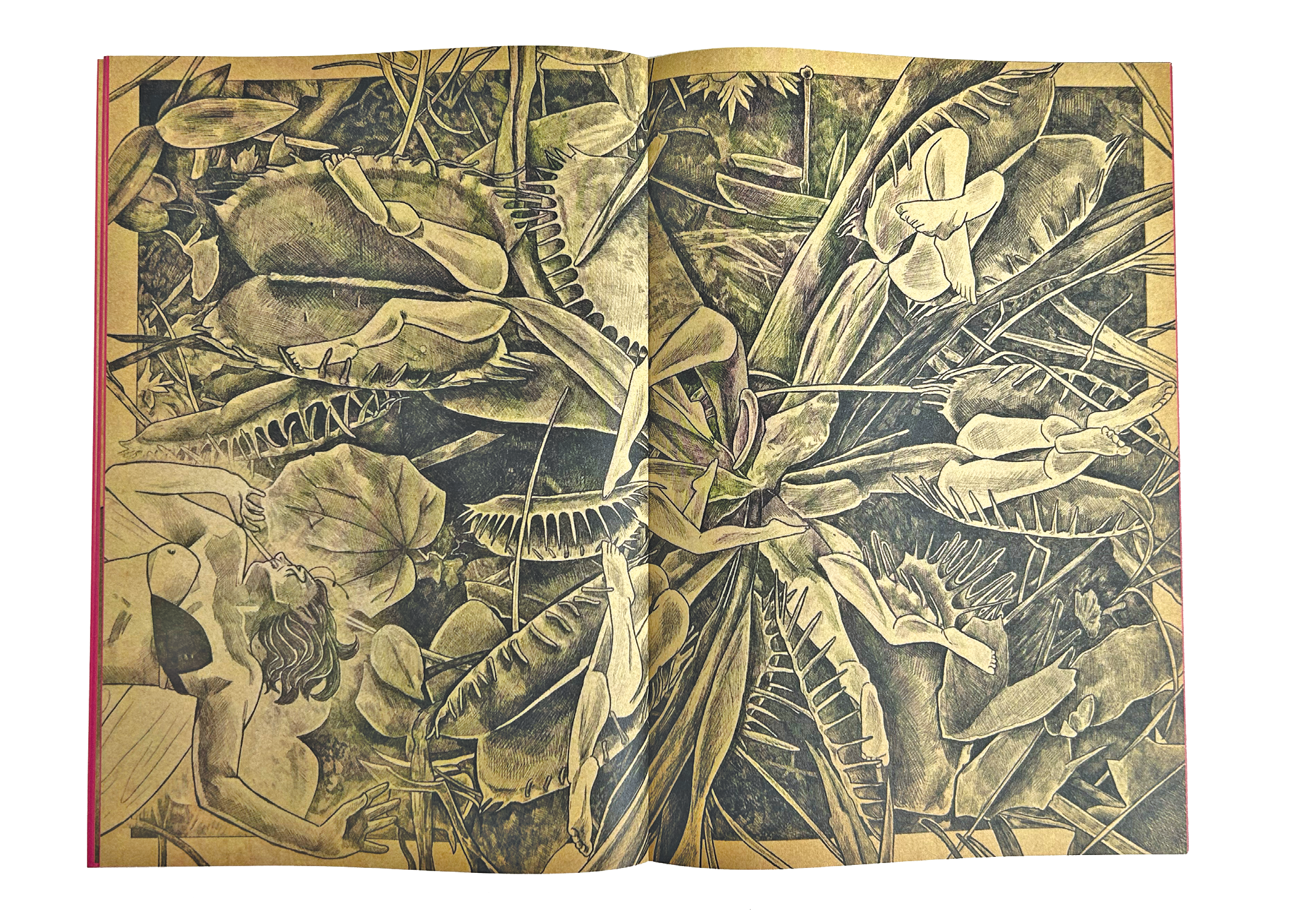
Venus and the Apis is an odd little comic; I created it during a period of deep depression, and much of its creation is a blur of retail work at an adult store next to a strip club, job hunting, and staying up all night obsessively trying to make a cohesive comic. I started this project hoping to enter it in the Silver Sprocket New Creator Competition. I didn’t win, for pretty obvious triple X-related reasons, but I honestly couldn't care less because of the satisfaction making this comic brought me.
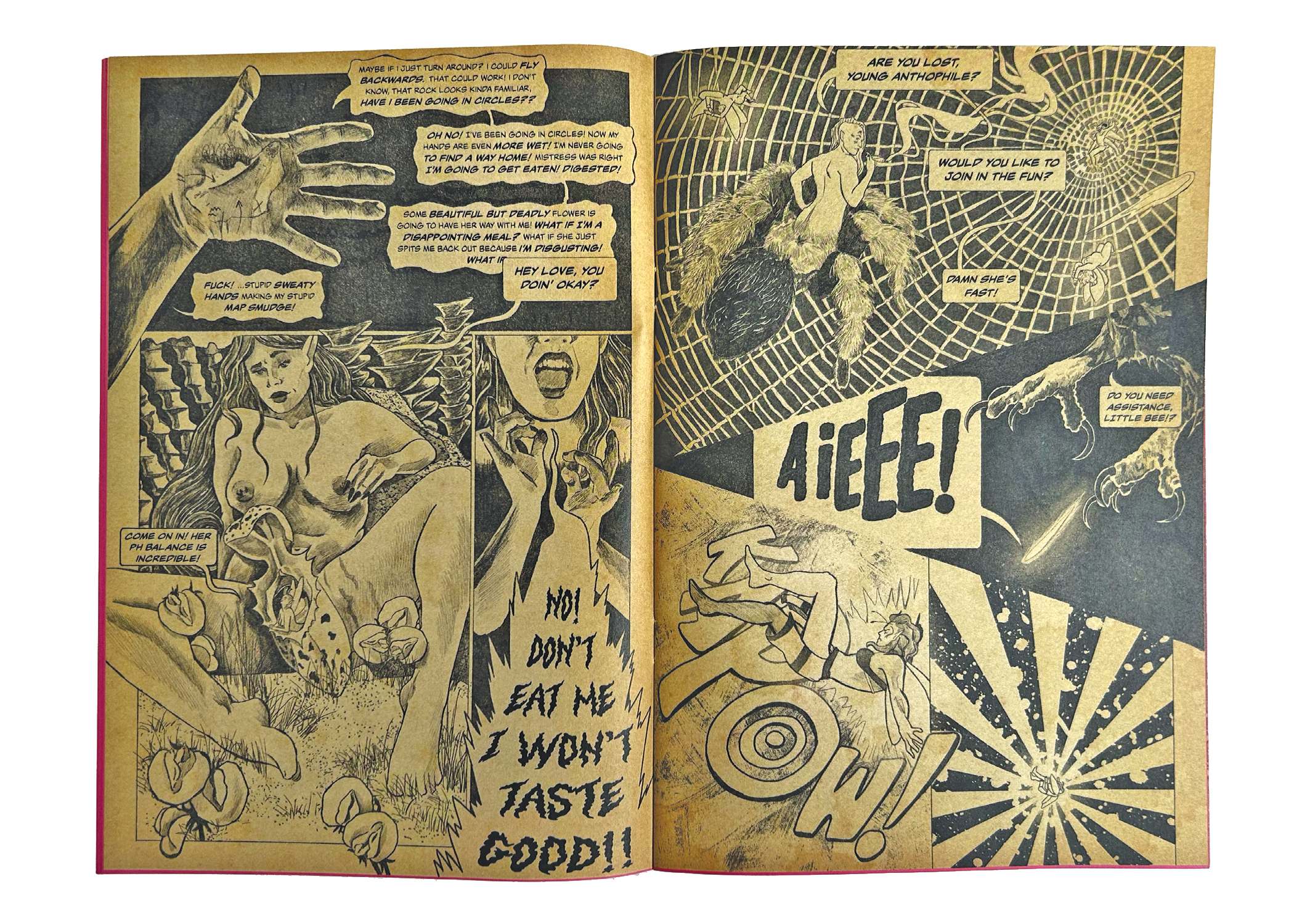
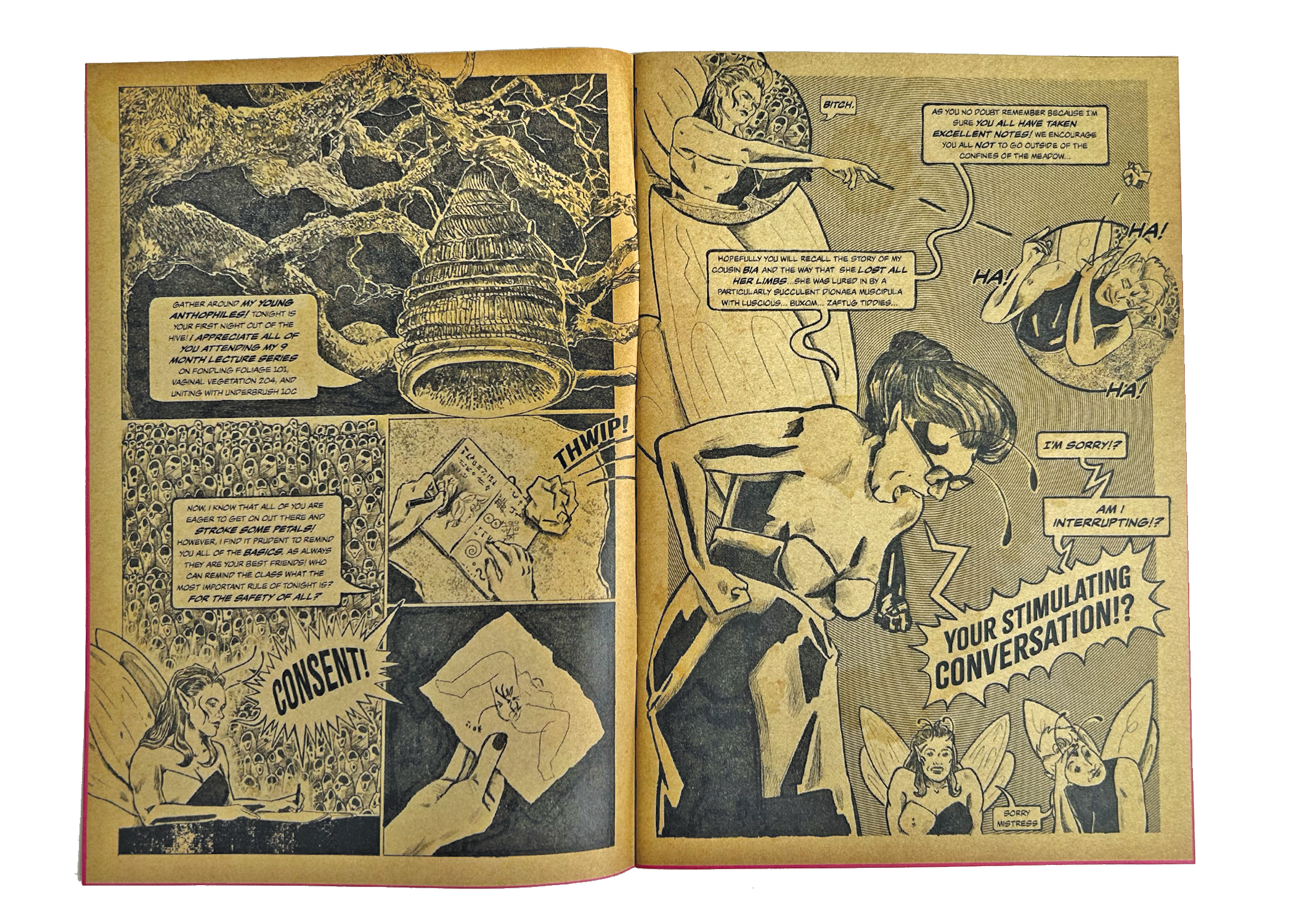
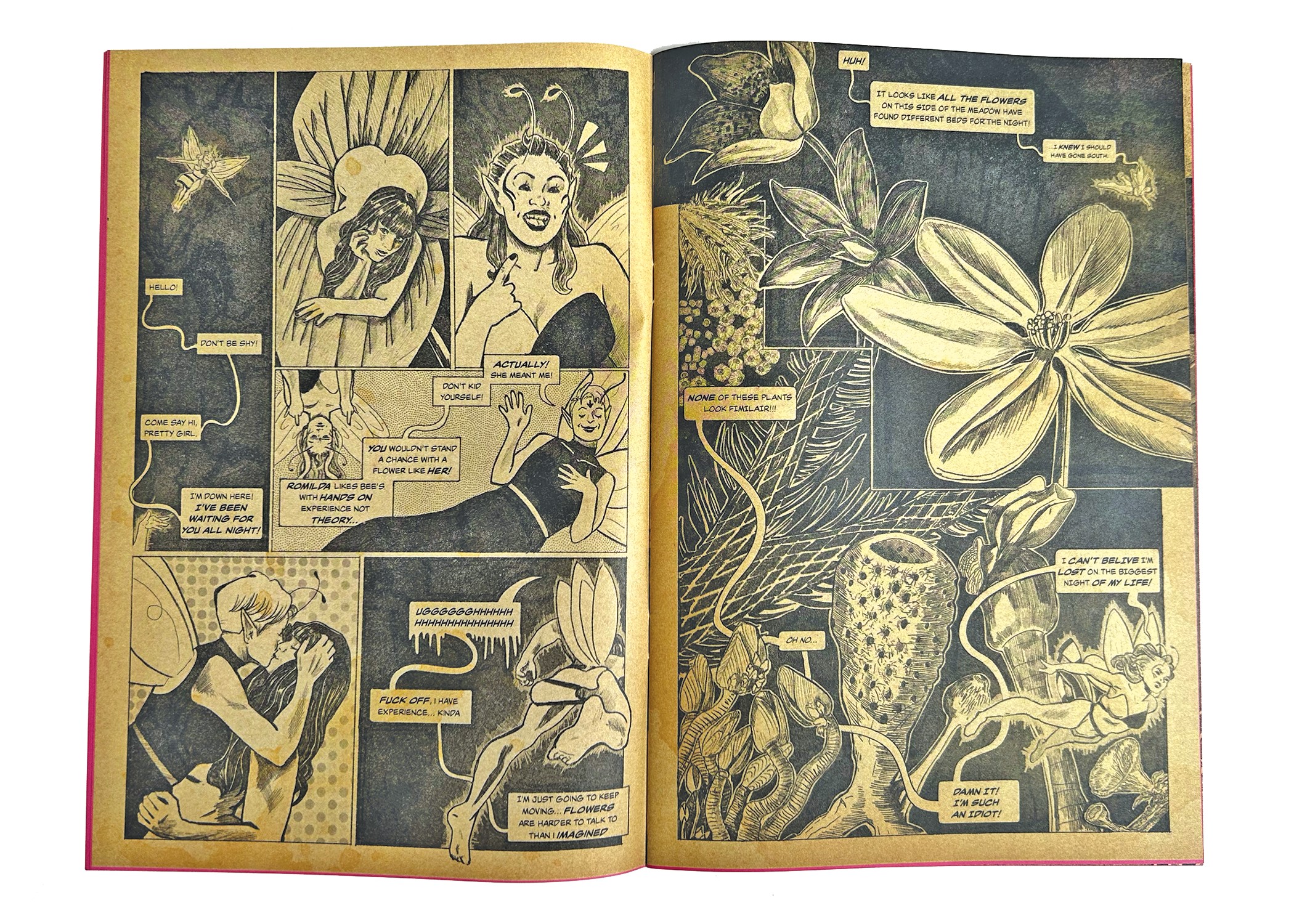
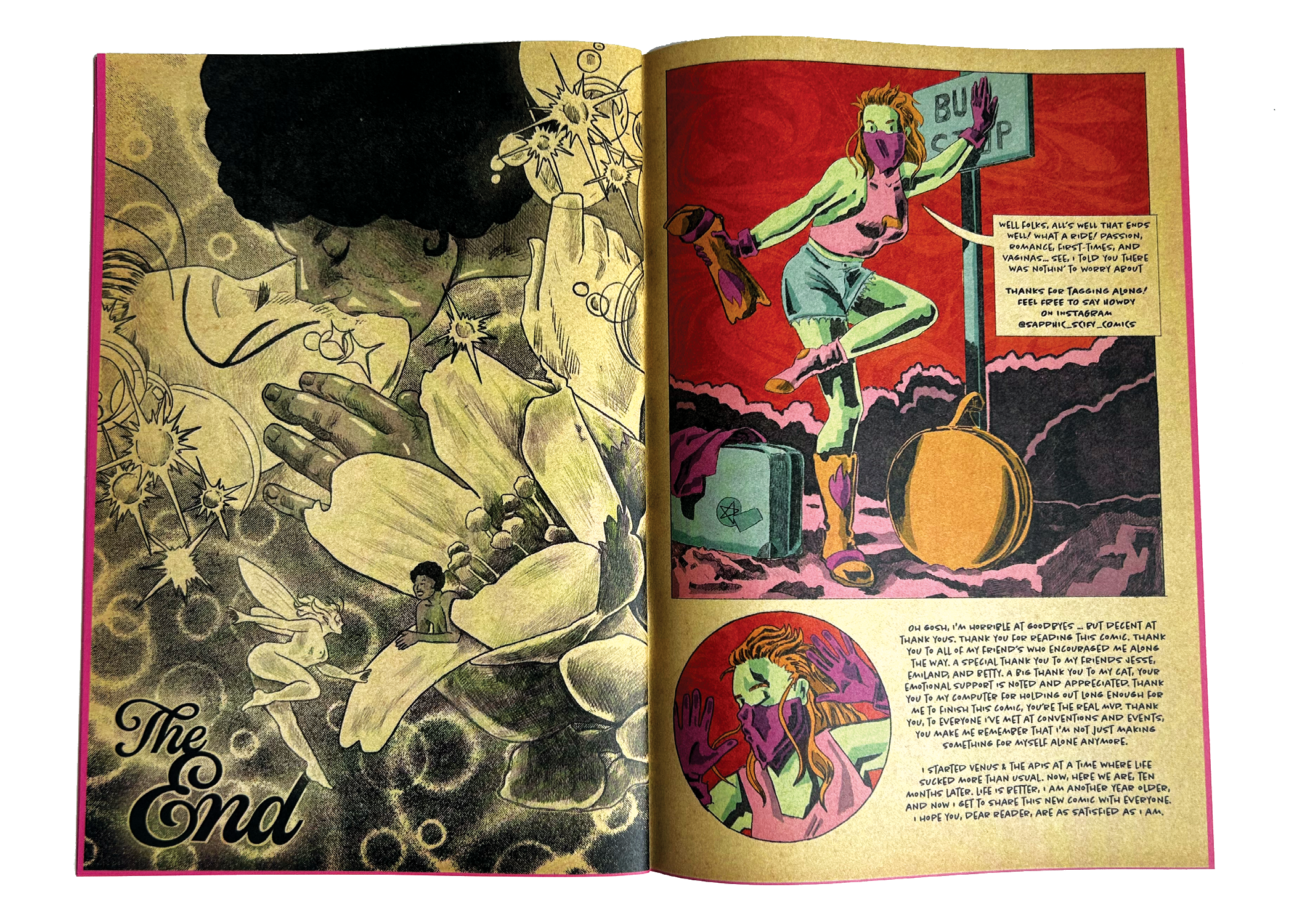
For Venus and the Apis, I wanted to scale the world back. Ether Quest felt like it had so many characters and moving parts that I wanted this one to be as simple as possible. This comic follows an anthropomorphic bee with poor navigational skills on her first night outside the hive as she attempts to connect with flowers for pollination. This comic is a stylized exploration of queer bar and hookup culture, but it was also deeply influenced by my daily adult-store retail surroundings.
It was an interesting and eye-opening experience (to say the least) to work at a store that actively sells not only sex and pornography but also has a shocking lack of the kind of erotic materials that I and those in my community would actually be interested in
Through Venus and the Apis, I once again found myself venting my frustrated questions onto a pixel-based page:
Where was the pornography made for me? Why is all the lesbian content I am finding for men? What is Jar-Jar Binks doing on the cover of a DVD at my shop? Why does online dating feel like a humiliation ritual? Why doesn’t pornography teach good consent and communication? Why doesn’t anyone giggle in these DVDs? Why are all the bodies I’m seeing so thin and so white?
I definitely didn’t get an answer to the Jar Jar Binks question! Or any of the other ones, really, but I did make a comic about it. A comic full of check-ins, giggles in awkward moments, and an ending that I find endearingly hopeful.
You can read select portions of Venus and the Apis here on my website!
2025
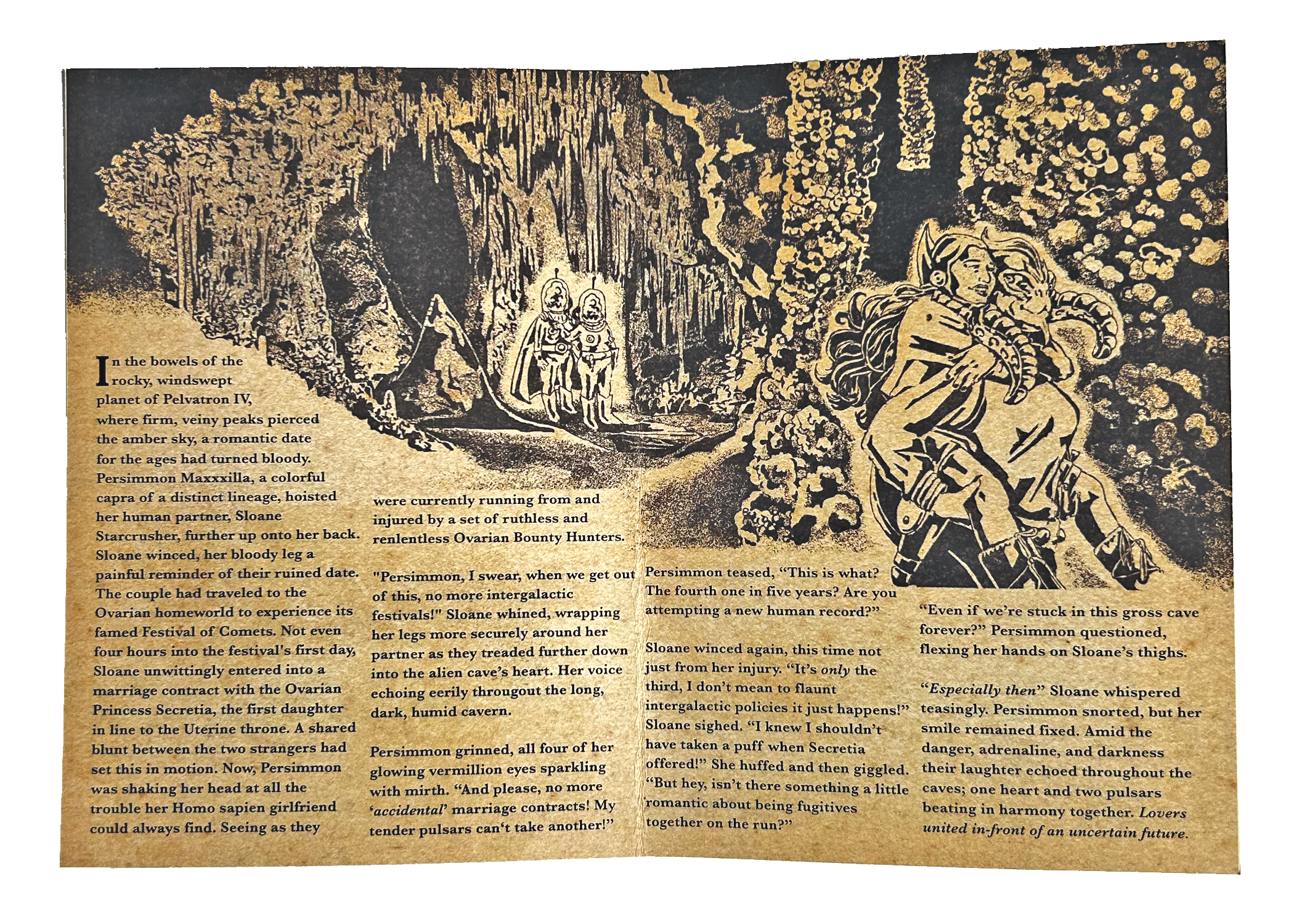
Starcrusher: and the great escape from pelvatron iv
Starcrusher is my latest (finished) venture into the world of pulp content. I can no longer afford to lose track of time on a full-scale comic. Starcrusher is my response: I focus on the title pages of pulpy magazines (i.e., the best part). I call them one-page pulp novels. They’re silly and fun, and they finally have an alien on the cover!
The Starcrusher series follows Sloane Starcrusher, the last surviving human in the cosmos, and her Capra girlfriend, Persimmon. The pair are always rushing off to grand dates and adventures, never looking for trouble but always finding it along the way.
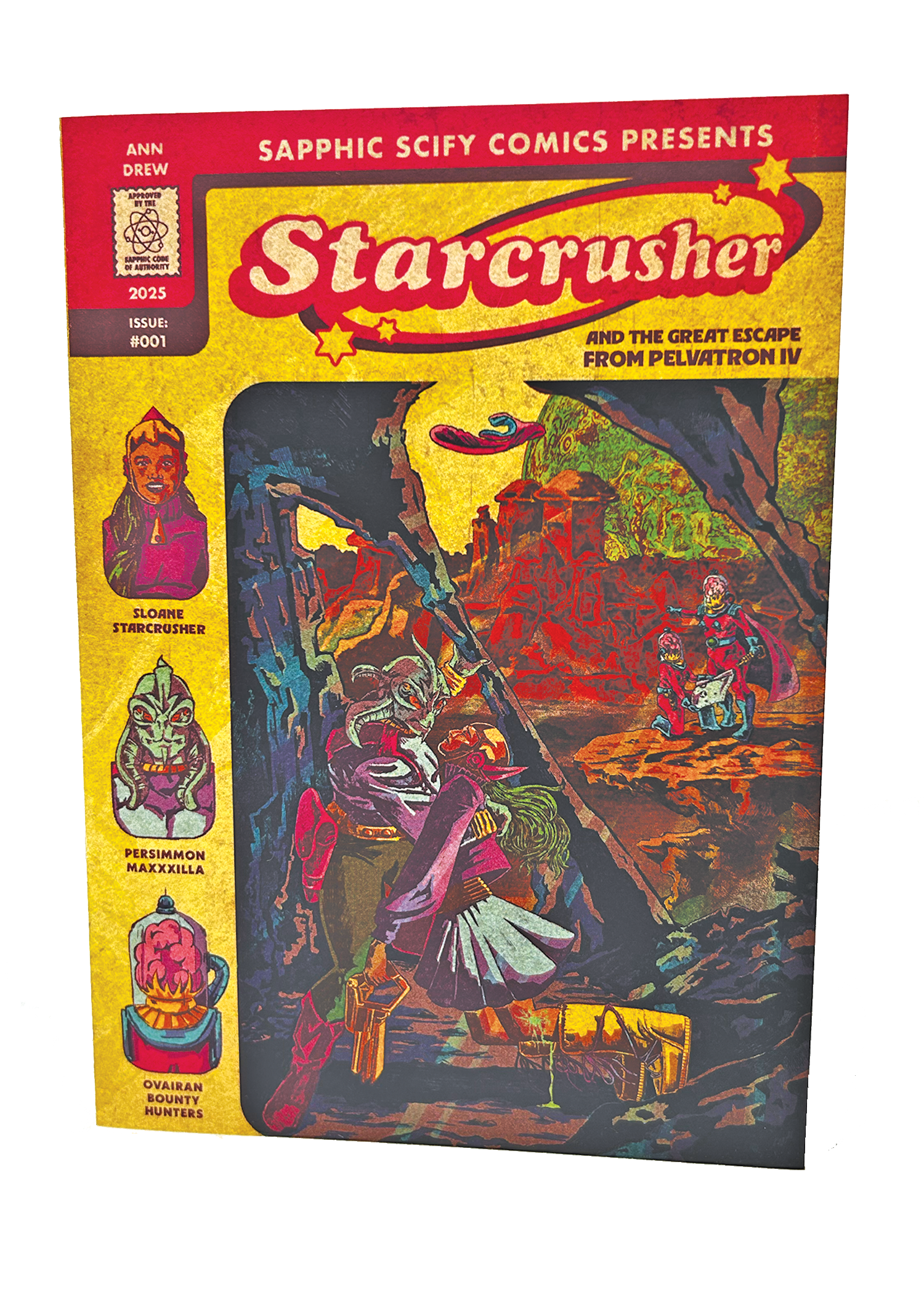
This is the first one-page novel in what I plan to be a series of 8-10 one-page novels featuring the same characters. This shorter form lets me play more with flash-fiction themes, spend more time with the characters, and enjoy a fun world-building exercise.